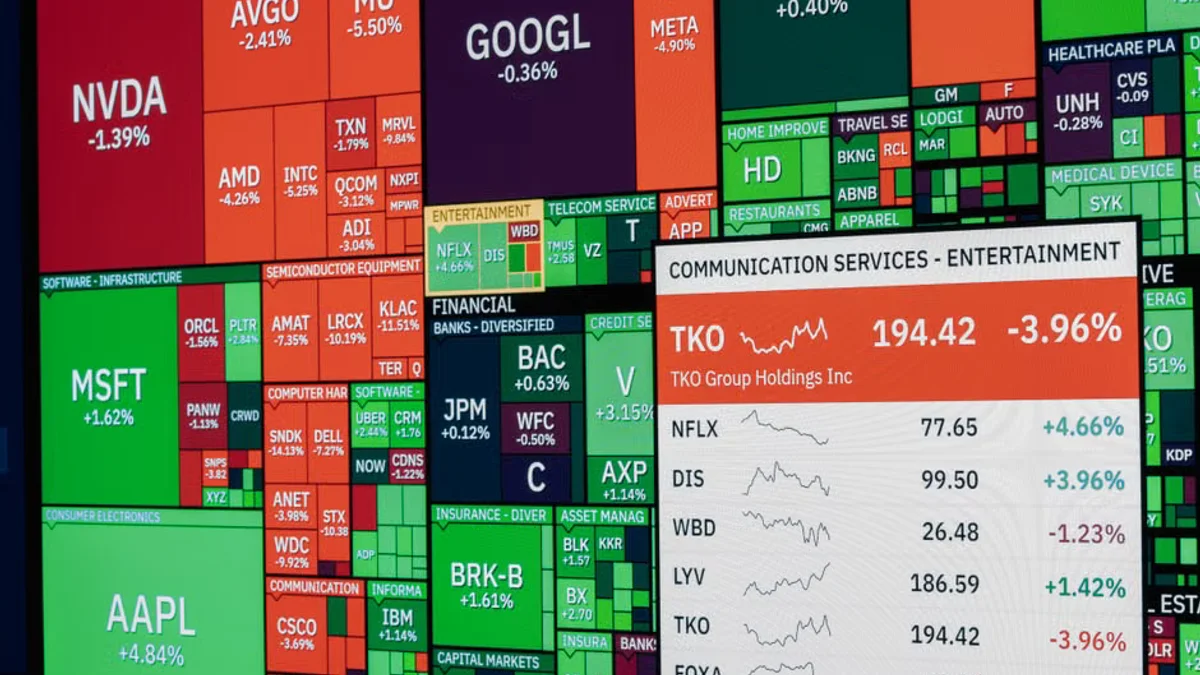

NEW YORK — Wall Street major indices finished the trading session in negative territory, pressured by a sharp escalation in crude oil prices and widespread selling across semiconductor equities. The S&P 500 and the technology-heavy Nasdaq composite both retreated as macroeconomic anxieties regarding sticky inflation and rising bond yields resurfaced.
Crude oil futures surged past $105 per barrel following supply concerns in the Middle East and tightening global inventories. The sudden commodity spike immediately rattled energy-sensitive sectors and stoked investor fears that central banks might maintain elevated interest rates for a longer duration to combat inflationary pressures.

Simultaneously, leading semiconductor manufacturers and artificial intelligence hardware providers experienced significant profit-taking. Analysts noted that lofty valuations in the tech sector, combined with rising Treasury yields, created an unfavorable environment for growth-oriented equities, prompting institutional investors to reallocate capital into defensive assets.
'Markets are grappling with a confluence of geopolitical risk premiums in energy markets and reassessments of monetary policy trajectories,' said chief market strategist at a leading New York brokerage. 'When oil climbs past critical psychological thresholds alongside climbing bond yields, equity valuations inevitably face downward gravitational pull.'
Trading desks anticipate continued volatility as upcoming macroeconomic data releases, including employment figures and consumer price indices, dictate the Federal Reserve's next policy moves. Investors are advised to maintain diversified portfolios to weather potential market turbulence.
Key Highlights

- S&P 500 and Nasdaq closed lower amid surging energy and bond market pressures.
- Crude oil prices climbed above $105 per barrel due to supply concerns.
- Semiconductor stocks faced heavy profit-taking and institutional sell-offs.
- Investors are closely monitoring central bank policy signals and upcoming inflation data.
As global markets navigate this volatile economic landscape, balancing energy cost shocks with technology sector repricing remains the primary challenge for institutional investors.