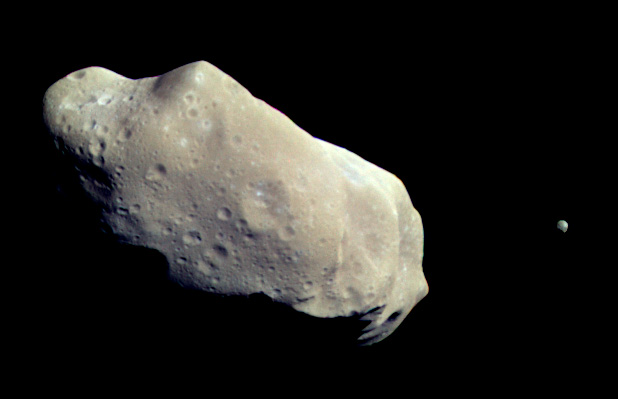
The Growing Concern Over Near-Earth Asteroids
Our planet Earth is constantly navigating through a vast and unpredictable cosmic ocean. While life on Earth thrives in peace, countless invisible dangers loom large in the deep space surrounding us. Recently, astronomers and space scientists have issued a striking warning that has caught global attention regarding the sheer volume of asteroids roaming in our cosmic neighborhood.
According to recent astronomical surveys, space agencies have identified at least 40,000 asteroids that pass relatively close to Earth's orbit. These objects, known as Near-Earth Objects (NEOs), range in size from small boulders to massive mountain-sized rocks. While the vast majority of them pose no immediate danger, their sheer numbers highlight the dynamic and sometimes hazardous nature of our solar system.
The 2,000 Potentially Hazardous Space Rocks
Not all 40,000 asteroids carry the same level of risk. Space scientists categorize a specific subset of these celestial bodies as 'Potentially Hazardous Asteroids' (PHAs). Currently, this dangerous category includes about 2,000 space rocks that are large enough and approach close enough to Earth's orbit to warrant continuous, intensive monitoring.
"Tracking these massive cosmic bodies is our top priority. We have advanced technology to monitor their paths and ensure humanity remains safe." — Space Scientist, NASA
History reminds us of the destructive power of asteroid impacts. Millions of years ago, a catastrophic impact is widely believed to have caused the extinction of the dinosaurs. While such massive impacts are extremely rare events on human timescales, the constant motion of these 2,000 rocks keeps astronomers on high alert.
Advanced Tracking and Future Defense Mechanisms
Fortunately, modern science is better equipped than ever before. Space agencies like NASA and the European Space Agency use powerful ground-based telescopes and radar systems to map the trajectories of these asteroids decades in advance. Missions like NASA's DART have even demonstrated that humanity now possesses the technology to deflect an asteroid if its path ever intersects directly with Earth.
In conclusion, while the presence of thousands of near-Earth asteroids demands continuous vigilance and scientific research, there is no immediate cause for panic. Scientists across the globe remain watchful guardians of our home planet.