
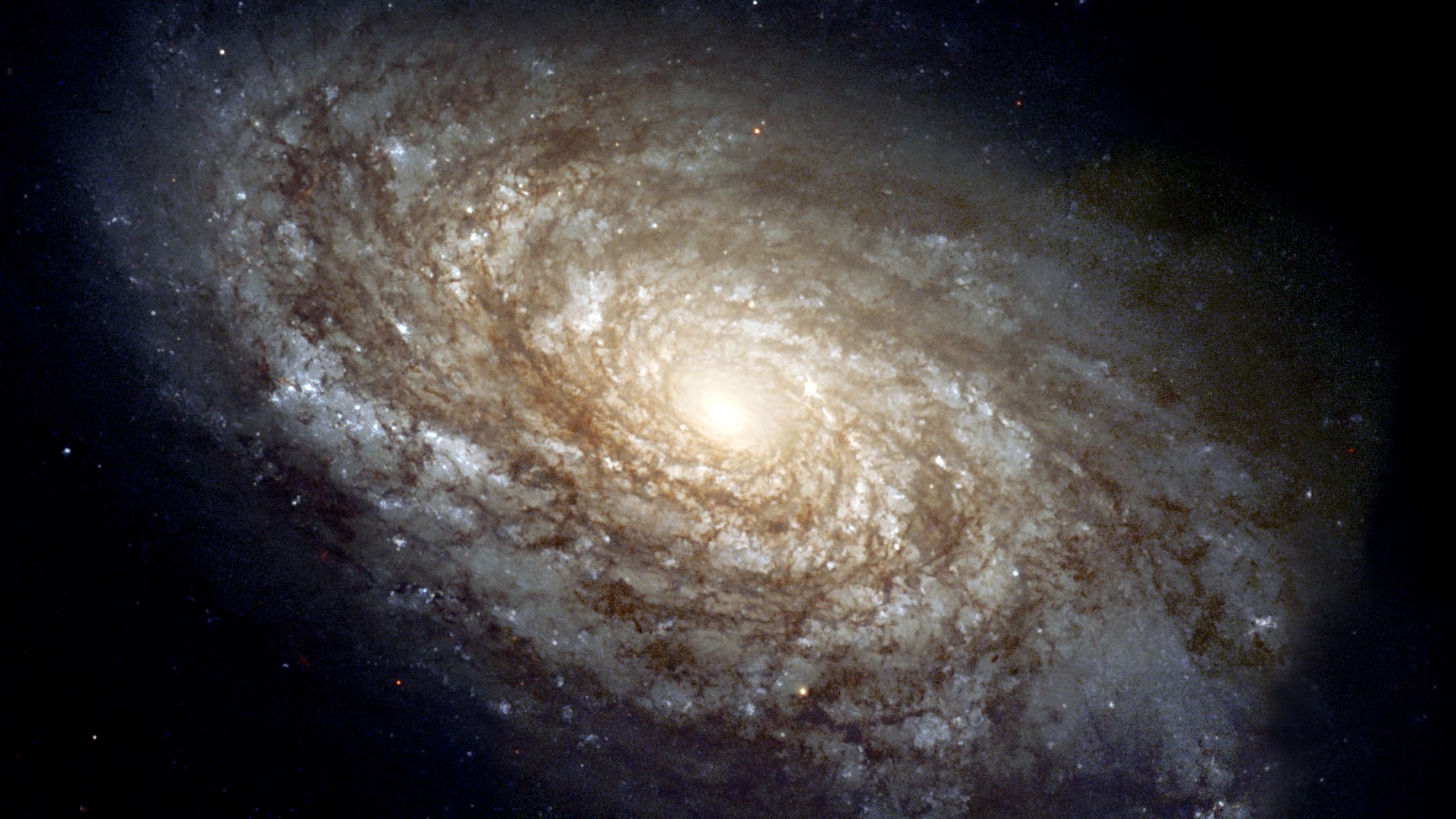
A Bizarre and Unprecedented Discovery in Deep Space
The universe continues to surprise scientists with its endless mysteries, and the latest astronomical find is no exception. Researchers have identified a peculiar system known as Fornax-7, which is baffling astrophysicists around the globe. This minuscule cosmic system features a setup where one satellite is observed orbiting another, presenting a phenomenon that challenges conventional understanding.
Estimated to be around 10 billion years old, Fornax-7 boasts a remarkably low mass, placing it firmly among the smallest and faintest systems ever recorded in human history. This unexpected discovery has instantly captured the attention of the global astronomical community, prompting further investigation into its origins and mechanics.
Gravitational Ties and the Search for Definitive Proof
Scientists are currently examining whether this strange system is gravitationally bound to the Fornax galaxy. If confirmed, it will mark a historic milestone in space exploration—the first time a galaxy of such low mass has been found to possess its own companion satellite.
While researchers still require additional data and advanced spectroscopy to verify these findings conclusively, the initial discovery is already being hailed as a major breakthrough. Understanding how such a lightweight system maintains its orbital dynamics could rewrite textbooks on galactic formation.
Challenging the Lambda Cold Dark Matter Model
This discovery has major implications for the Lambda Cold Dark Matter model, a foundational theory in cosmology. According to this model, dark matter halos of any significant mass should host smaller sub-halos. While this has been proven for massive galaxies like our Milky Way, it has remained unverified for tiny galaxies like Fornax.
"Discoveries of small cosmic structures like Fornax-7 allow us to test the very limits of our cosmological models and understand the elusive nature of dark matter." — Dr. Alok Verma, Senior Astrophysicist
If Fornax-7's satellite status is officially validated, it will elevate our understanding of dark matter interactions to an entirely new level, offering profound insights into how galaxies evolve across the vast expanse of space.


