
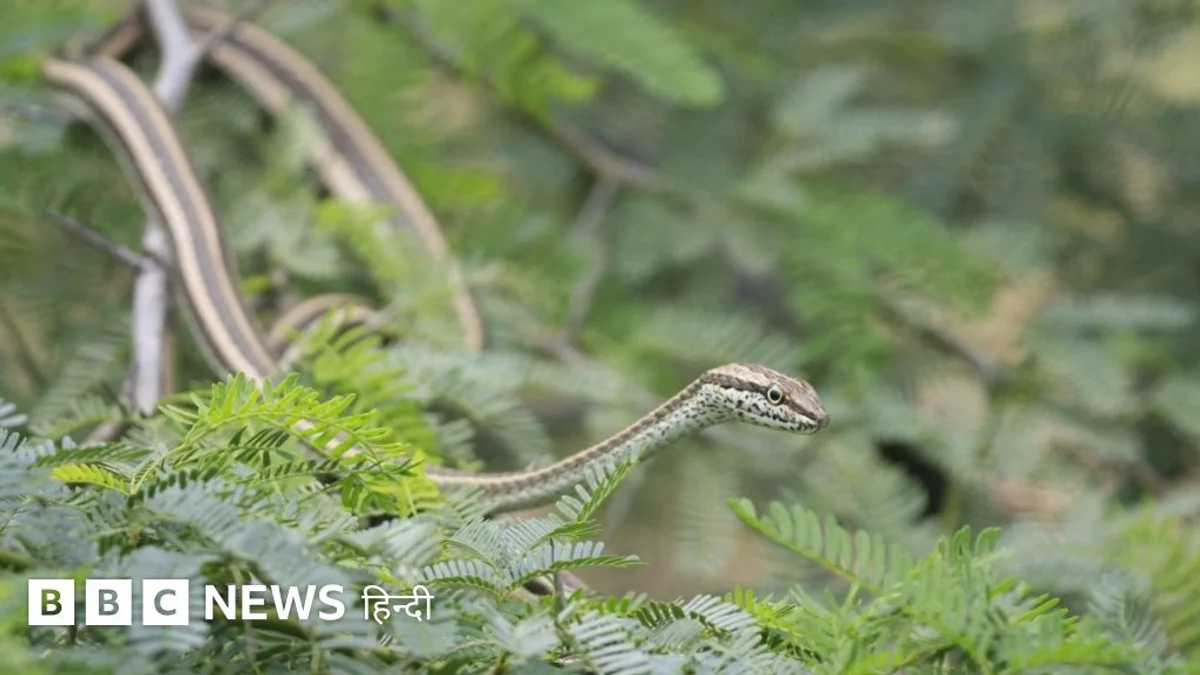
NEW DELHI — A series of unusual snake sightings across various states in India has sparked both fear and curiosity among citizens. In Gujarat's Kutch region, a rare snake species has been spotted after 150 years, while another two-headed mutant snake was also discovered in the state, baffling local residents. Meanwhile, deep in the forests of Chamba in Himachal Pradesh, a venomous Himalayan Pit Viper was caught on camera, exciting wildlife enthusiasts.
Beyond the wild, snakes are increasingly finding their way into human habitation. Recent reports highlighted an incident where a two-foot-long snake was found hiding inside a shoe, shocking the owner. In another bizarre case from Supaul, Bihar, a father rushed his snake-bite-afflicted son to the hospital while carrying the live snake responsible for the bite in his hands, creating panic among medical staff.
Understanding the Rare Sightings from Kutch to Chamba
Wildlife experts point out that the sudden appearance of rare species is closely linked to shifting environmental patterns. The sighting in Kutch after a century and a half indicates changes in desert ecology, while the presence of the Himalayan Pit Viper in Chamba shows how shrinking natural habitats push wildlife closer to human paths. As human settlements encroach upon forests, animals are forced to seek shelter and food in newer areas.
Climate change and rising temperatures are also altering reptilian behavior. Seeking cooler environments or dry shelters during extreme weather, snakes frequently crawl into dark corners, footwear, or damp basements. Experts advise heightened caution during seasonal transitions when snake movements naturally peak.
The Urgency of Public Awareness
Incidents like the one in Supaul underscore a critical lack of medical awareness regarding snake bites. Precious time is often wasted in panic or traditional rituals instead of seeking immediate medical intervention. Health officials continuously urge citizens to avoid handling live snakes and to rush victims to the nearest hospital for anti-venom treatment.
Authorities emphasize that most snakes are non-venomous and attack only when provoked. Citizens are advised to contact professional snake rescuers rather than attempting to harm or capture the reptiles themselves.