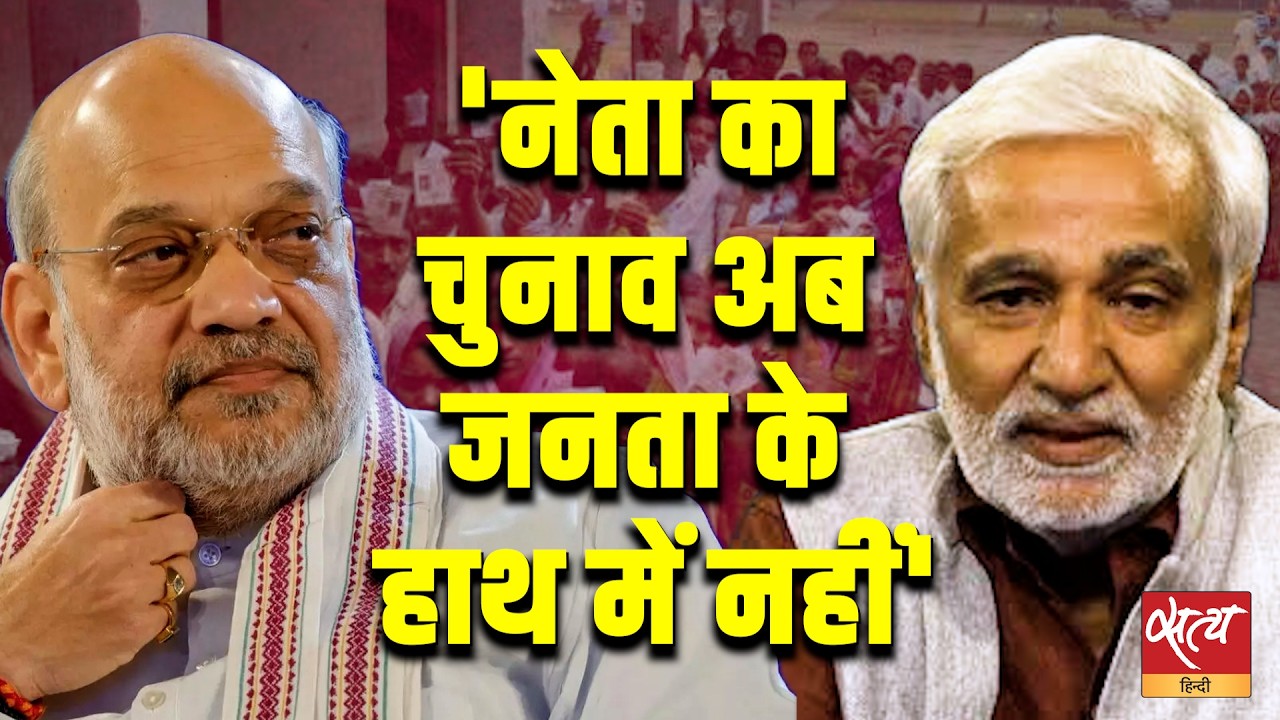
The ongoing discourse surrounding the state of Indian democracy and electoral politics has once again brought critical media and independent journalism into focus. Senior journalist and author Urmilesh recently shared his deep concerns regarding the shifting political paradigm in the country. He argued that the fundamental nature of elections and democratic processes has undergone a massive transformation, raising questions about the true agency of common voters in contemporary India.
The Shrinking Space for Independent Electoral Outcomes
Urmilesh pointed out that the narrative surrounding election results has increasingly drifted away from genuine public aspirations. With the massive infusion of financial resources, state apparatus utilization, and high-pitched campaigns, the playing field often tilts heavily in favor of the ruling dispensation. Independent analysts argue that when institutional checks and balances face severe pressures, the core tenets of a vibrant democracy experience a setback.
Elections in a healthy democracy are supposed to be fought on tangible developmental issues, unemployment, inflation, and public welfare. However, modern political strategizing frequently relies on hyper-nationalism, emotional appeals, and polarization. This strategic shift diverts public attention from real socio-economic challenges, leaving the average citizen struggling to make informed electoral choices.
Reflecting on LK Advani's Legacy and Past Warnings
The discussion also revisited the political journey and historical statements of Bharatiya Janata Party veteran Lal Krishna Advani. Observers often draw parallels between Advani's past political posture—marked by internal party democracy and institutional respect—and the highly centralized, personality-driven politics of the present era. Analysts suggest that understanding these historical shifts is crucial to comprehending the current political landscape under Prime Minister Narendra Modi.
While Advani's era represented a different phase of political mobilization and coalition-building, the contemporary political framework operates under vastly different dynamics. The centralization of power and the intense focus on top leadership have reshaped both the ruling party and the broader national political discourse.
The Politics of Grand Celebrations and Public Perception
The grand celebrations surrounding Prime Minister Narendra Modi's birthdays have also been a subject of intense political debate. Critics view these massive events as manifestations of a personality cult that undermines institutional supremacy. Conversely, supporters defend them as a genuine reflection of massive popular support and affection for a leader who connects directly with the masses.
Regardless of differing political viewpoints, media scholars note that such spectacles redefine how political power is projected and perceived in modern India. The fine line between governance, party promotion, and leader-centric branding continues to fuel debates among political scientists and commentators.
The Critical Role of Independent Journalism
Amidst these shifting political tides, the role of mainstream media has come under intense scrutiny. When mainstream outlets hesitate to question authority or overlook critical socio-economic failures, alternative digital platforms step in to uphold journalistic ethics.
"When mainstream media acts out of fear, temptation, or compliance, who will speak for the truth? We believe voices must be raised so that citizens can make informed decisions." — Satya Hindi Editorial Stance
Independent journalism remains vital for holding power accountable and ensuring that marginalized voices are heard. Without a fearless and questioning media, democratic accountability remains incomplete.
Conclusion
India's democratic journey stands at a critical juncture. The challenges confronting electoral integrity, political culture, and media freedom demand continuous public engagement and critical self-reflection. Ultimately, the strength of Indian democracy rests on the active awareness, vigilance, and questioning spirit of its citizens.