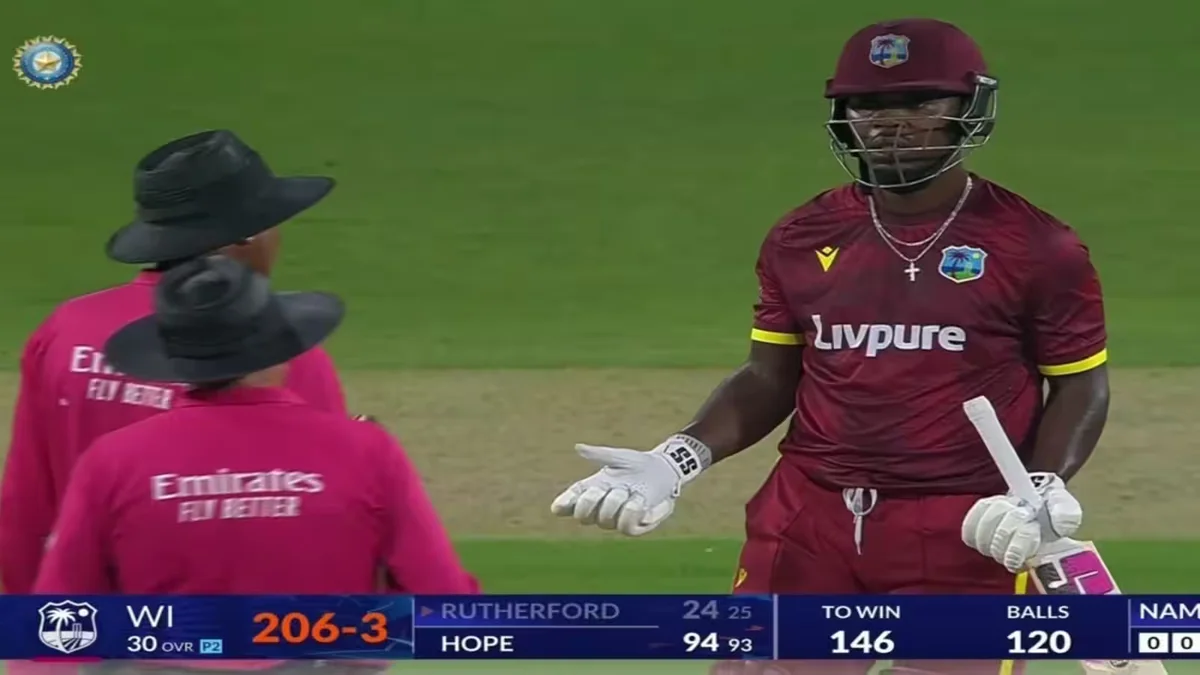
Tension on the cricket field is not uncommon, but the recent incident involving West Indies explosive batsman Sherfane Rutherford has become a major talking point across sports circles. During a recent match, a heated argument between the batsman and the on-field umpire over a contentious decision created high drama. Fans and analysts are actively discussing the sequence of events that led to this intense showdown.
Current Breaking Developments
While Sherfane Rutherford was at the crease, a controversial decision by the on-field umpire triggered a sharp reaction from the batsman. The situation escalated quickly, forcing a brief halt in play. The matter was referred to the third umpire, and the use of the Decision Review System (DRS) brought a new twist to the game.
Inside Details of the On-Field Clash
According to reports, confusion arose regarding a dismissal decision. Rutherford contested the on-field umpire's call and approached him for clarification, leading to a heated exchange caught on camera. The tension subsided only after technology intervened to clear the air.
The Role of DRS and Technical Nuances
- The third umpire scrutinized multiple replays to verify the legitimacy of the dismissal.
- Technology helped resolve the ambiguity surrounding the close call.
- Player reactions shifted significantly once the final verdict was displayed on the giant screen.
Broader Perspective and Team Context
West Indies cricket has experienced various highs and lows recently, from thrilling comebacks against New Zealand to individual player battles. Rutherford's fiery response reflects the intense competitive spirit characteristic of contemporary West Indian cricketers who fight tenaciously for every single run.
Future Implications on the Sport
Such incidents frequently spark debates regarding sportsmanship, player-umpire interactions, and the implementation of technology in modern cricket. Governing bodies continue to evaluate ways to maintain decorum while preserving the natural intensity of competitive sports.