
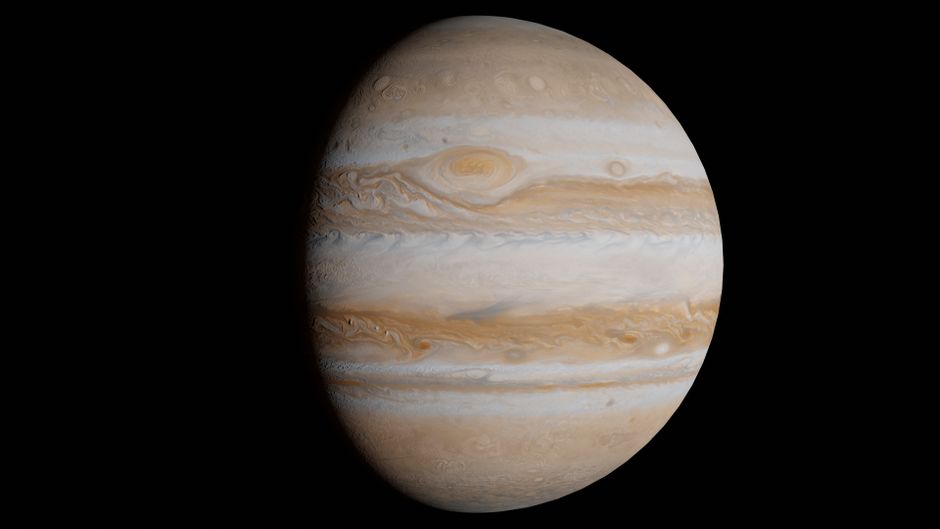
In a groundbreaking advancement for theoretical astrophysics, an international team of researchers has released comprehensive findings detailing the long-term stability and future dynamics of our solar system. Utilizing advanced supercomputing clusters, the study models gravitational interactions across hundreds of millions of years, mapping potential orbital variations among the inner and outer planets.
The research, which has sparked significant global discussion within the scientific community, addresses long-standing questions regarding planetary chaos and orbital eccentricity. While previous models hinted at unpredictable shifts in the distant future, the latest simulations provide rigorous statistical probabilities, narrowing down the margin of error in predicting planetary trajectories.
Lead astrophysicists involved in the project stressed that the findings do not indicate any immediate threat or alteration to Earth's orbit. Instead, the research serves as a fundamental benchmark for understanding celestial mechanics and the lifecycle of planetary systems across the broader galaxy. These insights are crucial for calibrating space-based observatories and enhancing our comprehension of exoplanetary systems.
Government space agencies and academic institutions have praised the study for its methodological precision. As humanity continues to expand its reach into deep space and rely increasingly on satellite infrastructure, understanding the subtle perturbations within our own cosmic neighborhood remains paramount.
Key Highlights
- Advanced supercomputing models long-term planetary orbits over millions of years.
- Research confirms Earth's immediate orbital stability with high statistical confidence.
- Findings offer crucial data for understanding broader galactic celestial mechanics.
Ultimately, this research bridges theoretical physics and practical astronomy, ensuring that humanity maintains a vigilant and scientifically grounded perspective on our cosmic future.


