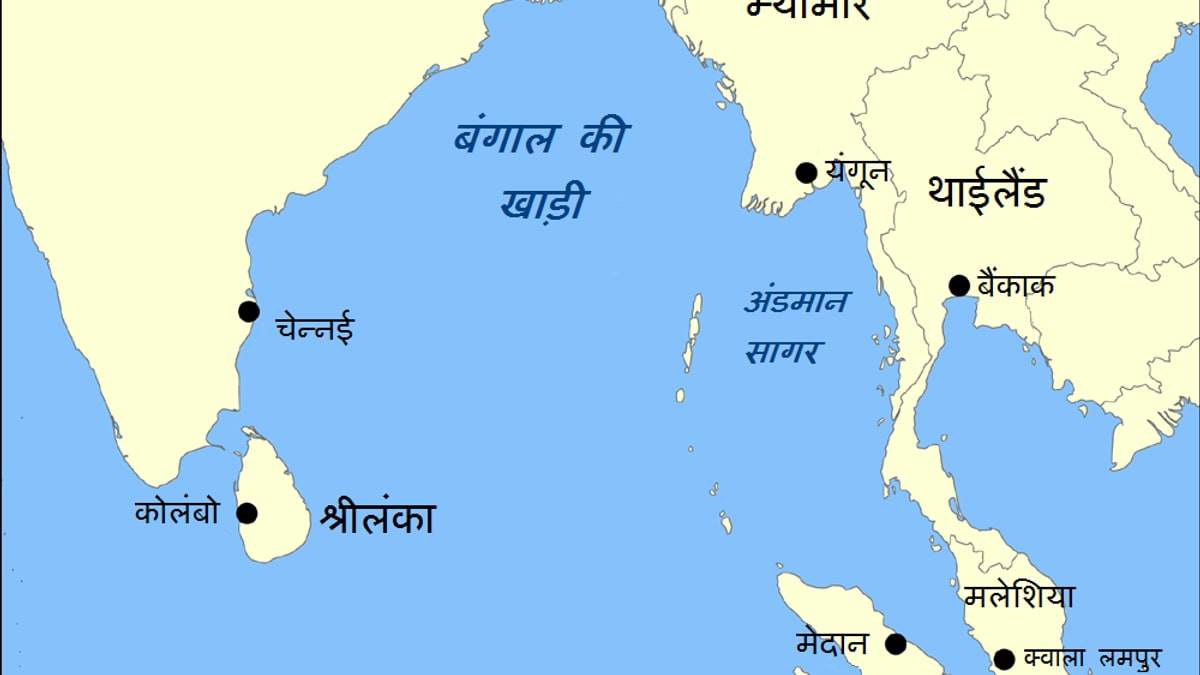
When The Freelance's special ground investigation team analyzed data from coastal areas adjacent to the Bay of Bengal and meteorological centers, the situation appeared alarming. The Bay of Bengal is virtually 'boiling' at present. Rising sea surface temperatures (SST) are rapidly impacting the weather cycle, resulting in fresh weather turbulence in the gulf. According to meteorologists, this is not just a routine seasonal shift, but the ominous sound of a destructive cyclonic storm that has alarmed security agencies and coastal residents.
Major Turbulence in the Sea and Deep Depression 'ARNAB'
In the past few hours, the deep depression formed in the central parts of the Bay of Bengal has intensified, informally tracked as Cyclone 'ARNAB'. According to our sources and satellite imagery, this system is rapidly gaining energy. The warm ocean water is acting as 'fuel' for this cyclone. According to India Meteorological Department (IMD) warnings, this deep depression could soon turn into a severe cyclonic storm, raising fears of massive destruction in coastal areas.
Which States Face the Greatest Threat?
Due to the direction of cyclonic winds and the impact of this new system in the Bay of Bengal, the weather across several eastern and southern states of India is set to change abruptly. Administration in coastal districts of West Bengal, Odisha, Andhra Pradesh, and Tamil Nadu has been put on high alert. Fishermen have been strictly warned not to venture into the sea, as the next 48 to 72 hours could prove extremely sensitive and dangerous.
Dual Impact on Agriculture and Ecology
Interestingly, while these cyclonic and monsoon systems from the Bay of Bengal often spell disaster, recent data reveals another side. For instance, systems originating from the Bay of Bengal previously saved states like Jharkhand from drought conditions, allowing farms to thrive. However, with extreme events like Cyclone 'ARNAB' escalating, it is clear that the Bay of Bengal's weather cycle is transitioning from a blessing to a severe environmental and humanitarian crisis.
Safety Precautions: How Prepared is the Administration?
- NDRF and SDRF teams have been deployed in vulnerable coastal areas.
- Danger signals have been hoisted at ports, and sailors have been ordered to return to safety.
- Evacuation of villagers from low-lying areas to cyclone shelters has begun.
- Emergency control rooms have been established to maintain power and communication lines.
The Freelance's investigation makes it clear that the boiling Bay of Bengal is not just a local weather aberration, but a dangerous symptom of changing oceanic behavior driven by global warming. The coming days will test India's eastern coast, and our team will continue monitoring every development closely.