
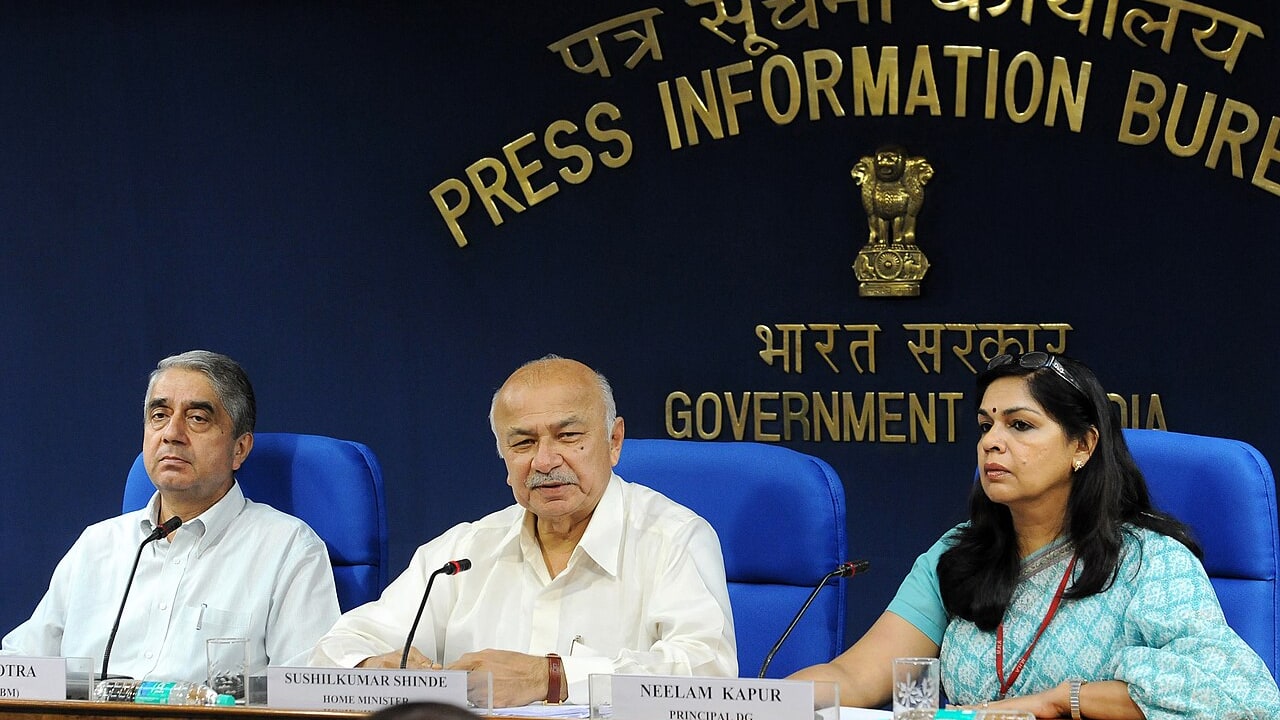
Home Ministry's New Initiative: Demography Committee Seeks State Data
In a significant move to study population shifts and demographic changes across the country, the high-level 'Demography Changes Committee' established under the Union Home Ministry has reached out to all states and union territories. An official communication has been dispatched requesting comprehensive and detailed data regarding shifts in religious populations over the past fifteen years. This initiative aims to thoroughly understand the evolving demographic patterns in sensitive zones, border districts, and industrial clusters.
Prime Minister Narendra Modi had announced the formation of a high-powered Demography Mission on August 15, 2025. Following this announcement, the specialized committee was constituted under the chairmanship of retired Justice Prakash Prabhakar Nawlekar. The primary mandate of the committee is to conduct a scientific analysis of demographic fluctuations and their underlying causes in various parts of the nation, thereby enabling the formulation of logical future policies.
According to the directives issued, states are required to submit time-series data spanning from 2011 to the present day. This notably includes the religious structure of tribal populations, district-level demographics, and a chronological account of structural shifts. Furthermore, the committee has urged state governments to share their own administrative assessments and reports regarding these significant demographic transformations.
Scrutiny of Birth Registrations and Government Document Updates
The scope of this high-level survey extends beyond general population figures to encompass vital administrative records. The committee has issued clear directives to provide religion-wise and district-wise birth registration data covering the last fifteen years. Additionally, detailed information regarding sudden shifts or trends in citizen identification enrollments, such as Aadhaar cards, voter identity cards, and ration cards, has been sought.
Administrative officials indicate that this data will assist in understanding how population density and structural compositions have varied unexpectedly across different regions. Special focus has been directed toward border districts and major industrial hubs, as internal and external migration heavily influences demographic balance in these territories.
Government sources emphasize that compiling such detailed data is crucial for internal security and long-term developmental planning. Through this mechanism, the administration aims to ensure that resource allocation and welfare schemes reach beneficiaries accurately based on verified demographic realities.
Details on Property Transactions and Vehicle Registrations Demanded
The purview of the data requested by the demography commission goes beyond basic identity records, incorporating economic activity logs. Recent guidelines mandate that states report the extent of immovable properties acquired and vehicle registrations processed across various religious communities over the past fifteen years.
Integrating district-wise statistics of school admissions, property transactions, and vehicle purchases alongside religious indicators represents a unique administrative exercise. The committee intends to examine the trajectory of participation and progress of different communities across socio-economic parameters.
Through this expansive process, the administration aims to establish a transparent and robust database reflecting economic prosperity and social transformations in every corner of the nation, enabling precise assessments of regional demographic realities in the future.
Political Fallout: Owaisi Raises Questions
The establishment of the demography commission and its demand for granular data have sparked sharp political reactions. AIMIM chief and Lok Sabha MP Asaduddin Owaisi has raised serious questions regarding the intentions behind this administrative exercise. Taking to the social media platform X, he voiced sharp critique against the central administration.
"Whenever we demanded that the Modi government compile data on the educational, social, and economic conditions of Muslims, the administration quickly turned away. Now, Amit Shah's Demography Commission is asking states for data on how many vehicles people of a particular faith bought, who owns how much land, and so on. The agenda of this commission is not to formulate better policies based on data, but to twist statistics to target Muslims." — Asaduddin Owaisi, President, AIMIM
Following Owaisi's statements, the political discourse surrounding the issue has intensified significantly. While opposition factions question the rationale behind such data collection drives, the ruling establishment maintains that being thoroughly aware of demographic realities is a constitutional responsibility necessary for transparent governance.
Implications for Future Policies and Internal Security
Experts observe that population and demography have consistently remained sensitive subjects in a vast and diverse nation like India. Concerns regarding unregulated migration, infiltration, and shifts in local demographic ratios have persisted in various states for decades. Consequently, possessing accurate district-level and religion-wise data will empower policymakers to formulate concrete strategies addressing regional imbalances.
Nevertheless, ongoing debates concerning data privacy, authenticity, and potential political implications are bound to escalate. The responses submitted by the states to the demography committee will dictate the administration's subsequent steps in this domain. Political and administrative analysts across the nation are closely monitoring how the commission ultimately formulates its report amidst the delicate balance of internal security, social harmony, and developmental goals.


