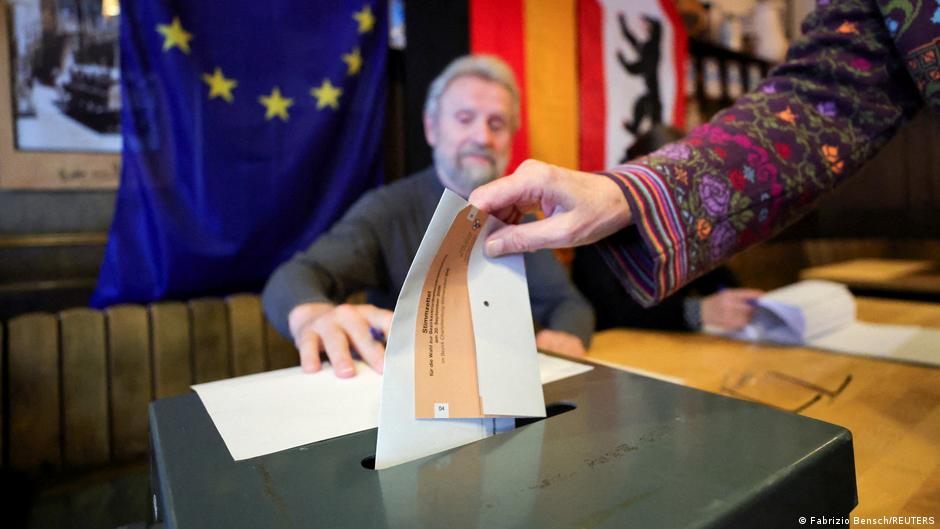
Political tension is running high in Germany as polling is underway for state legislative elections in the capital city of Berlin and the north-eastern state of Mecklenburg-Western Pomerania. Although these are regional elections, their nationwide implications could heavily impact the stability and future of the federal government led by Chancellor Friedrich Merz.
Chancellor Merz has seen a notable decline in his popularity over recent weeks, forcing him to fight hard to maintain his political footing and rescue his party's public image. Analysts note that these election outcomes will determine the trajectory of national politics in the near future.
The Shadow of Sachsen-Anhalt and Pressure on Chancellor Merz
The political crisis facing Chancellor Friedrich Merz stems from a series of disappointing regional outcomes and rising public discontent. The biggest blow came in the state of Sachsen-Anhalt, where the Chancellor's center-right Christian Democratic Union (CDU) suffered a major defeat.
In that election, the far-right Alternative for Germany (AfD) emerged as the strongest political force, securing nearly 44 percent of the vote. This heavy setback has intensified scrutiny over Merz's leadership and policies, making the ongoing elections in Berlin and Mecklenburg-Western Pomerania crucial survival tests for the ruling coalition.
Tight Race Between CDU and The Left in Berlin
The electoral battle in Berlin is exceptionally fierce, featuring a tight contest between the ruling CDU and the left-wing party 'Die Linke'. A total of 17 political parties are contesting seats in the German capital.
Recent polling indicates that both major contenders enjoy roughly 20 to 23 percent support, while the AfD holds the third position. Die Linke is being led for the first time by its top candidate Elif Eralp, whose campaign focusing on affordability has drawn significant public attention.
Housing Shortages Dominate the Berlin Campaign
The core issue for voters in Berlin is the severe housing crisis plaguing the city. With roughly 85 percent of residents living in rented accommodations, soaring rents have become a massive burden. Advertised rents have doubled since 2014, and the city faces a projected shortfall of over 200,000 homes by 2040.
Political parties have placed affordability at the center of their campaigns, with Die Linke pledging to act on a 2021 referendum where 59 percent of Berliners voted in favor of placing large corporate landlords under public control to stabilize rent prices.
AfD Gains Ground in Mecklenburg-Western Pomerania
In Mecklenburg-Western Pomerania, Germany's least populous and lowest-income state, the political landscape is heavily contested. While the center-left Social Democratic Party (SPD) led by popular incumbent Minister-President Manuela Schwesig holds a slim lead at around 37 percent, the far-right AfD remains a very close contender.
Even if the AfD secures the most votes in the state, forming a government remains uncertain due to the established 'firewall' policy among other mainstream parties, which strictly refuse coalition cooperation with far-right factions.