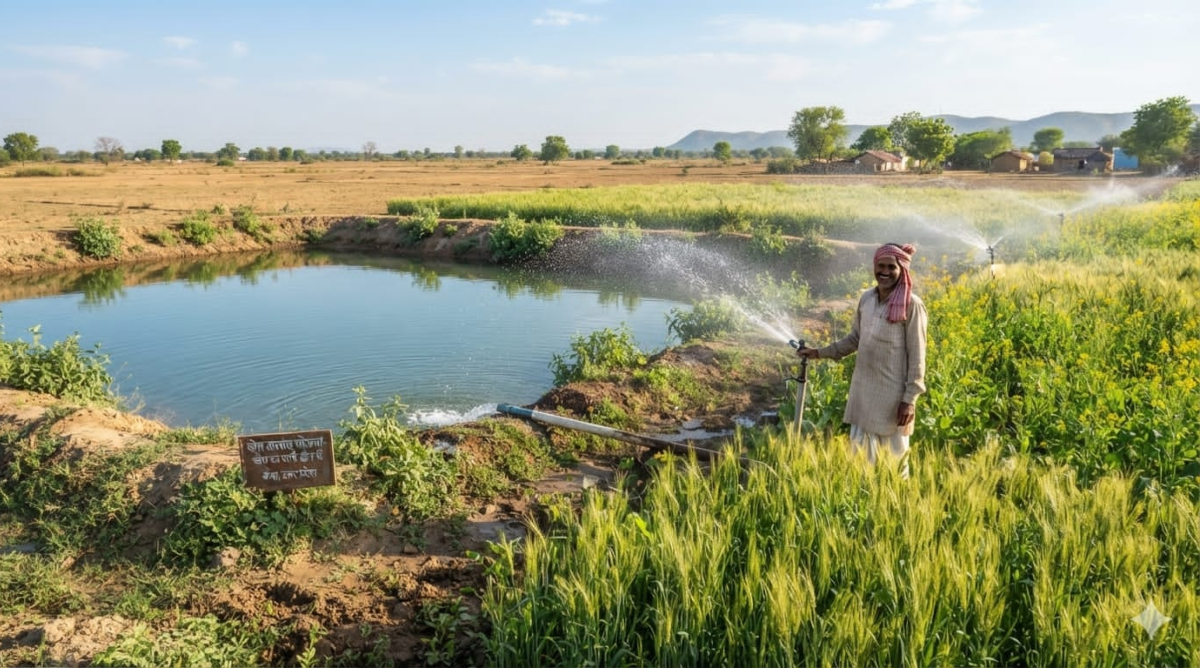
A New Wave of Hope in the Dry Lands of Bundelkhand
The landscape of the Banda district in Bundelkhand, once notorious for severe water scarcity, is steadily undergoing a transformative change. The ambitious 'Khet Talab Yojana' (Farm Pond Scheme) initiated by the Yogi Adityanath government in Uttar Pradesh is proving to be a true blessing for local farmers. Under this scheme, rainwater—which previously went to waste through unchecked runoff—is now meticulously harvested and stored in farm ponds constructed directly on or near agricultural lands. When dry spells hit, farmers utilize this stored water to irrigate their crops, successfully quenching the thirst of their parched lands and significantly improving crop yields.
Just a few years ago, farming in rural pockets of Banda such as Mataundh was akin to a high-stakes gamble. Cultivators relied entirely on erratic monsoon rains. A timely downpour meant survival, while poor rainfall often meant total crop failure and the inability to recover even the basic input costs. Staple crops like wheat, paddy, mustard, gram, and pigeon pea suffered immensely due to persistent water deficits. The situation had deteriorated to such an extent that many farming households faced crippling debt and were forced to migrate to urban centers in search of manual labor. However, the Khet Talab scheme has successfully turned this widespread despair into optimism.
Mechanism and Impact of the Khet Talab Scheme
The primary objective of the farm pond initiative is water conservation and the subsequent revival of depleting groundwater tables. Under this framework, financial and technical assistance is provided to construct ponds of designated sizes right in the fields. When it rains, excess water flowing across the terrain is safely channeled into these reservoirs. This localized water management approach has proven exceptionally effective for semi-arid regions like Bundelkhand, where erratic weather patterns make traditional irrigation unreliable.
Agricultural experts note that Bundelkhand experiences intense rainfall during brief spells, but historical lack of adequate storage infrastructure resulted in massive water runoff. The farm pond model directly addresses this structural flaw by enforcing the principle of holding water right where it falls. By easing the financial burden on cultivators through direct government subsidies for pond excavation, the administration has empowered farmers to take charge of their own irrigation needs without falling prey to private moneylenders.
Modern Irrigation Integration and Subsidy Support
The initiative goes beyond mere excavation; it integrates modern agricultural technology to maximize water efficiency. The Department of Agriculture is extending substantial subsidies for pipelines, diesel/electric pump sets, and sprinkler irrigation systems. Traditional flood irrigation methods traditionally led to massive water wastage through seepage and evaporation. In contrast, modern sprinkler systems ensure that even limited water supplies cover large acreages effectively.
Local farmers express immense relief, noting that the presence of reliable water sources on their own land has eliminated the prohibitive costs of renting heavy diesel pumps during critical crop-growing phases. With secured irrigation, farmers are now investing with renewed confidence in intensive cropping patterns and diversified farming.
"The Khet Talab scheme has made the farmers of Banda self-reliant. They no longer need to wait helplessly for the monsoon; instead, they possess their own private water reserves for irrigation. This year, our target is to benefit 255 new farmers in the district under this scheme, and selection processes are already progressing rapidly." — Dr. Abhay Raj Singh, Deputy Director of Agriculture, Banda
Curbing Migration and Strengthening Rural Economy
A remarkable socio-economic byproduct of the scheme's successful implementation in Banda is the notable decline in distress migration. Rural youth and farmers who previously left their ancestral villages are now successfully harvesting multiple crop cycles annually on their own homesteads. This has injected fresh liquidity into the rural economy, fostering sustainable livelihoods at the grassroots level and turning a historically backward region into a vibrant agricultural contributor.