
The Political and Social Stir in Ranchi
In late January 2026, during a two-day tribal dialogue event in Ranchi, Jharkhand, Rashtriya Swayamsevak Sangh (RSS) Chief Mohan Bhagwat made remarks that ignited a major social and political debate. Bhagwat clearly stated that Sarna is a traditional method of worship rather than a distinct religion. Defining Hinduism in broad and inclusive terms, he argued that Hindu traditions are not bound by any single mode of worship, but represent an inclusive way of life and peaceful coexistence.
This statement unleashed a wave of reactions across Jharkhand. While opposition parties and various tribal organizations criticized the stance, arguing it undermines indigenous identity, several tribal leaders came out in support. Supporters noted that tribal communities have historically shared deep socio-cultural ties with Sanatan traditions, participating enthusiastically in mainstream festivals.
Historical Roots and Evolution of Sarna Identity
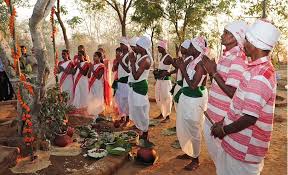
The term 'Sarna' as an organized religious identity emerged primarily during the 1930s in the Chota Nagpur region, now part of Jharkhand. Linguistically, the word originates from the Mundari term 'Sarse', meaning a cluster of sacred sal trees. Traditionally, it refers to the sacred grove where tribal communities perform community rituals.
Over time, other tribes like the Oraon, Ho, and Santhal adopted the term to assert their collective identity. By the 1970s, many tribals began recording 'Sarna' in official census forms, with the 1971 census recording around 300,000 adherents. The formal political demand for a separate 'Sarna Code' gained momentum in the 1980s, initiated by leaders like Kartik Oraon.
The Ongoing Debate Over Sarna Code and Assimilation
The push for a distinct 'Sarna Dharma Code' continues to be a central political issue in Jharkhand. Proponents argue that a separate administrative and religious code is essential to protect indigenous traditions and ensure targeted welfare benefits. Currently, without official recognition as a distinct major religion, Sarna followers are often counted under the Hindu or 'Other' categories during national censuses.
While regional groups emphasize their unique nature-worship traditions devoid ofidol worship and scriptural rigidity, cultural nationalists view Sarna as an intrinsic forest-dwelling (Aranya) branch of Sanatan culture, citing shared reverence for rivers, mountains, and trees.

