
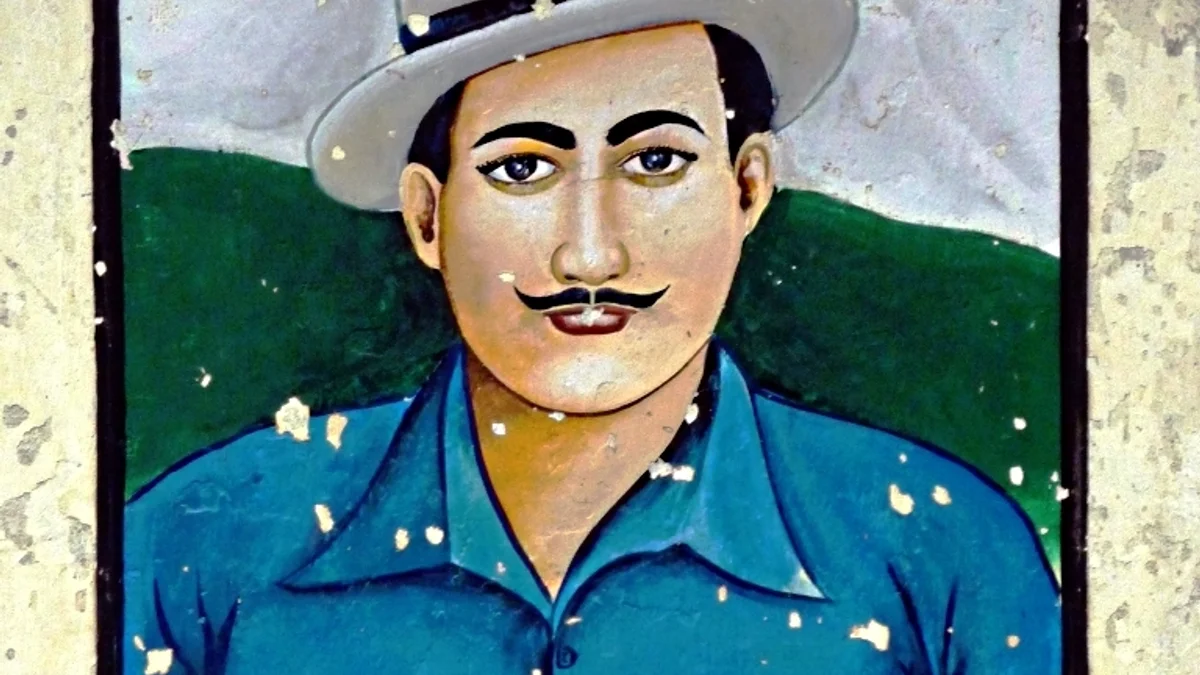
What would a person want to eat just hours before their death? This question, as simple as it seems, becomes extraordinarily profound in the case of Bhagat Singh, India's great revolutionary. Ketki Pandey's short film 'The Last Meal' places this final wish of the immortal martyr of the freedom struggle at the heart of its narrative. On that historic evening of March 23, 1931, as the time for the hanging of Bhagat Singh, Sukhdev, and Rajguru drew near in Lahore Central Jail, Bhagat Singh asked Booga, the jail's cleaner, to prepare food for him. He affectionately called Booga 'Bebe'. In the film, 'makke ki roti' (cornbread) and 'sarson ka saag' (mustard greens) become part of this last meal, but their significance goes far beyond mere sustenance.
A Message of Equality on a Plate
The true importance of this incident lies not in what Bhagat Singh wished to eat for the last time, but in who he wanted to prepare it. Booga represented an individual at the lowest rung of a social system where caste and untouchability were harsh realities of life. Bhagat Singh asking for food prepared by Booga was not like a grand speech or proclamation, but rather a practical demonstration of the idea of social equality. Even for this fearless revolutionary, standing before death, a person's identity was far greater than their caste or social status. It was an act that directly challenged the deeply entrenched inequality of that era.
This is the most poignant and thought-provoking part of the film. Ishitiaq Khan, in the role of Booga, effortlessly brings forth the hesitation and social diffidence inherent in his character. He faces a prisoner who is to be hanged in a few hours, yet Bhagat Singh, in his interaction, shows no sense of superiority or or inferiority. Akash Dahiya, as Bhagat Singh, captures this very simplicity, resolve, and humanity. His performance lacks unnecessary fervor or artificial heroism. The peace, composure, and deep ideological clarity of a young man facing death become the greatest strengths of his acting, touching the audience deeply.
A Unique Confluence of Death and Humanity
The meal sequence in the film is exceptionally effective because the desire for home-cooked food and the terrifying reality of impending death run parallel. 'Makke ki roti' and 'sarson ka saag' cease to be mere dishes. They become symbols of home, affection, the scent of the soil, and a remembrance of the life Bhagat Singh was about to leave behind forever in just a few hours. This meal is not just a means to satisfy physical hunger but becomes a way to nourish the soul. However, implicit in the choice of this food is also the question of social equality, presenting yet another example of Bhagat Singh's progressive ideals.
It is here that 'The Last Meal' distinguishes itself from other films made on Bhagat Singh. Most films about Bhagat Singh often highlight his revolutionary struggle, the bombing of the assembly, his court trials, his time in jail, and ultimately his execution as major narrative milestones. In those films, his heroism is typically showcased through grand events, explosions, and passionate speeches. Ketki Pandey's film steps outside these grand narratives and sits before a simple plate. Here, the revolution is not found in a bomb blast or an impassioned speech, but in the desire to accept food from the hands of a person whom society had denied equal status for centuries. It's a subtle but powerful message that true revolution lies not only in political change but also in human relationships and social justice.
In today's context, the significance of this episode increases even further. Bhagat Singh's images and name are still widely used in political speeches, posters, and social media. However, his ideas are often limited to his valor and sacrifice. 'The Last Meal' reminds us that viewing Bhagat Singh merely as a brave martyr is to diminish his personality. For him, social equality, humanity, justice, and the dignity of every individual were equally crucial issues.
Ketki Pandey's direction advances this entire story without unnecessary noise. The dim light of the jail, the shadows of the bars, the clinking of keys, and the rising tension amidst food preparation vividly evoke that last evening. The film creates its profound impact in the moments leading up to the execution, rather than making the hanging itself the climactic scene. It introduces us to the serene patience and unwavering conviction that resides within a visionary revolutionary.
The true strength of 'The Last Meal' is that it offers an opportunity to view Bhagat Singh's last wish and the deep human message hidden behind it, rather than just re-enacting his martyrdom. The 'makke ki roti' and 'sarson ka saag' prepared by Booga ultimately become a meal that holds more affection than hunger, and more the idea of equality than just food. After the film ends, what remains in the audience's memory is not the scene of the execution, but that final meal and its revolutionary meaning. And perhaps, this is the greatest success of this small yet profoundly impactful film.
'The Freelance' does not independently verify the claims made in this video viral on social media platforms. This video has become a subject of wide discussion on social media. Video credit: Respective social media handle / creator.

Entertainment & Culture Desk, The Freelance
Verified Editorial DeskCinema, OTT, Culture & Arts Reporting Team
Covering Indian cinema, OTT platforms, arts, and cultural trends with objective reviews, critical insights, and authentic storytelling. We are committed to unbiased, factual journalism based on verified agencies, official statements, and on-the-ground correspondents.