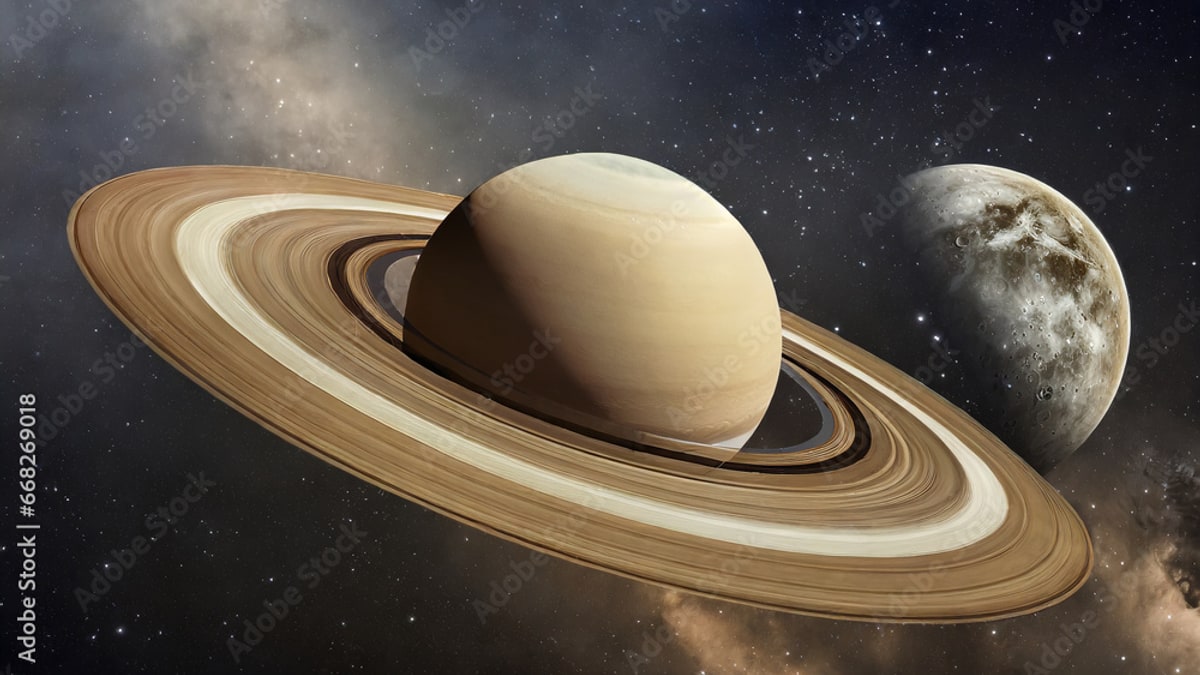
NEW DELHI/GORAKHPUR: Space enthusiasts and researchers are closely monitoring a series of rare celestial events, highlighted by the close alignment of Saturn and the Moon. As Google Trends records a massive surge in searches for 'Saturn planet', this investigative report delves into the latest astronomical phenomena, including upcoming planetary parades and groundbreaking discoveries about Saturn's magnetic and atmospheric systems.
Current Breaking Astronomical Events
On Monday night, stargazers in Gorakhpur and various parts of India witnessed a breathtaking cosmic alignment where the Moon passed closest to Saturn. This rare event allowed amateur and professional astronomers to observe Saturn's majestic rings alongside lunar craters with striking clarity. Furthermore, discussions regarding the 'Planetary Parade 2026' have gained momentum across media platforms, promising a rare alignment of multiple planets visible from Earth.
Historical Background and Saturn's Mysteries
Saturn has fascinated humanity ever since Galileo Galilei first observed its rings in the 17th century. Over decades, space missions like Voyager and Cassini have revolutionized our understanding of the gas giant. Recent scientific findings suggest that Saturn's northern lights act as a massive natural generator, driving the planet's atmospheric and magnetospheric energy systems—a discovery that continues to intrigue astrophysicists worldwide.
Future Outlook and Public Enthusiasm
With upcoming cosmic alignments and advanced space missions on the horizon, public interest in astronomy is touching new heights. Science centers across India are gearing up to host special stargazing events, ensuring that these celestial spectacles inspire the next generation of scientists and space explorers.