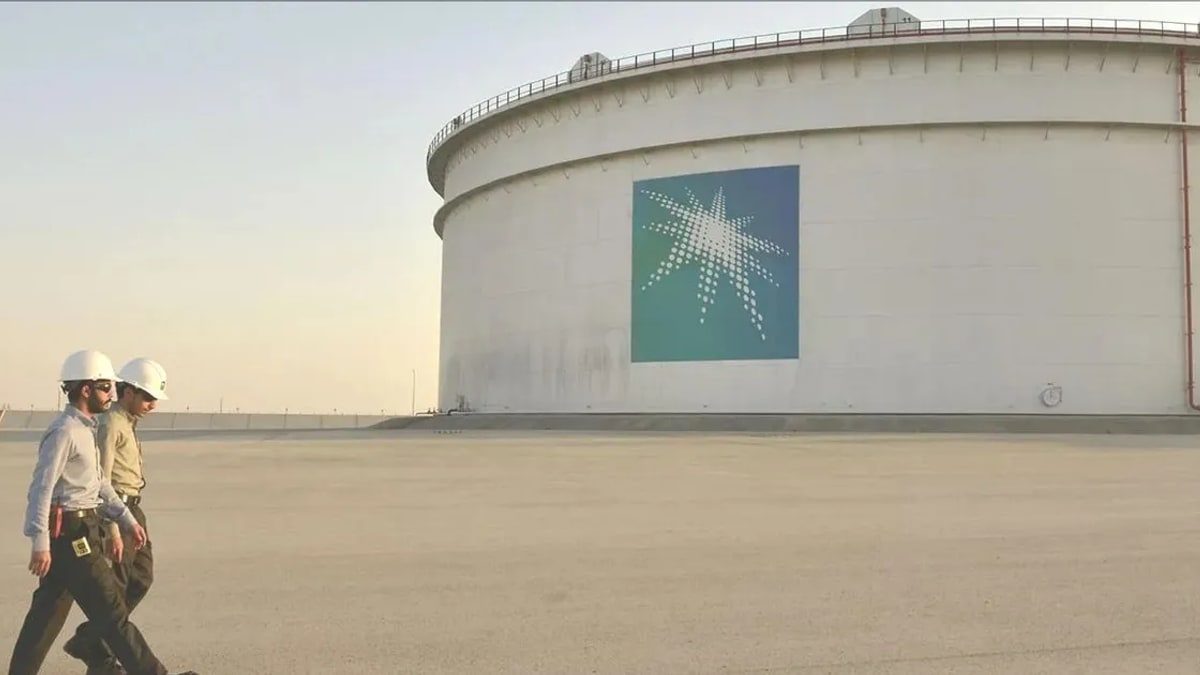
A major development in the international energy market has drawn the attention of vehicle owners and common citizens across India. Saudi Arabia, one of the world's leading oil exporters, has announced substantial price cuts for crude oil supplied to Asian markets. Following this move, expectations arose in major importing nations like India regarding a potential reduction in retail petrol and diesel prices. But will this actually ease the financial burden on the common man, or is it merely a paper discount?
Saudi Aramco's Historic Move and Record Discount
Saudi Arabia's state-owned oil giant, Saudi Aramco, has significantly reduced the official selling price (OSP) for its flagship Arab Light crude for the upcoming month. The discount has been set at 5 dollars per barrel below the Oman-Dubai regional average, marking the largest such reduction in six years. This step aims to attract major buyer economies in Asia, particularly India and China. Since India imports a vast majority of its energy requirements from the Middle East, such pricing shifts directly impact the Indian refining sector.
Although this significant discount was initially perceived as major relief, energy sector analysts point out other critical dimensions. Experts believe that a mere reduction in the baseline cost of crude oil does not automatically translate into immediate price cuts at Indian fuel stations due to complex economic and geopolitical factors.
Rising Shipping Costs and Logistics Realities
A common citizen naturally wonders why fuel prices do not drop immediately when Saudi Arabia offers cheaper oil. The primary reason is the soaring freight and maritime transport costs in the Persian Gulf and surrounding sea routes. Due to maritime security concerns, longer shipping routes, and ongoing geopolitical tensions, the operational expenses for oil tankers have surged considerably.
According to refinery sources and industry reports, the reduction of around 3 dollars per barrel is largely offset by the additional costs required to secure maritime tankers and cover extended transport routes. Thus, while a hefty discount appears on paper, the actual delivery cost to Indian ports does not decrease by the same proportion. Furthermore, global benchmark Brent crude continues to trade at elevated levels, maintaining pressure on overall import baseline costs.
State Oil Companies and Recovery of Past Losses
Public sector oil marketing companies (IOCLs, BPCL, HPCL) play a vital role in determining retail fuel prices in India. When international crude prices skyrocket, these companies often absorb the shock by keeping pump prices steady to protect consumers from sudden inflation, resulting in financial losses known as under-recoveries.
Whenever global prices dip or discounts are offered, oil companies prioritize recovering their past losses and stabilizing their financial margins first. Only after this process is completed do they consider reducing fuel prices for retail consumers. Consequently, a considerable time gap often exists between a drop in refinery-gate costs and actual price relief at the petrol pump.
Heavy Taxation and State-Level VAT
Another stark reality of the Indian fuel market is that a substantial portion of the retail price paid by consumers goes toward government taxes, including central excise duty and state-level value-added tax (VAT). Fluctuations in international crude prices directly affect only the base price of the fuel.
Even if crude oil becomes slightly cheaper globally, the lack of structural changes in taxation means consumers do not receive full relief. Additionally, varying VAT rates across different states lead to noticeable price differences between neighboring regions and cities.
Conclusion: Will Common Citizens Get Relief?
In summary, the discount offered by Saudi Arabia is crucial for maintaining a smooth supply chain for Asian economies. However, given current global uncertainties, high shipping expenses, oil companies' past deficits, and domestic tax structures, a major drop in retail petrol and diesel prices in India remains unlikely in the near future. Unless global benchmark prices remain subdued over an extended period, consumers may have to wait longer for significant reductions in their fuel bills.