The Debate Over Religion and Politics
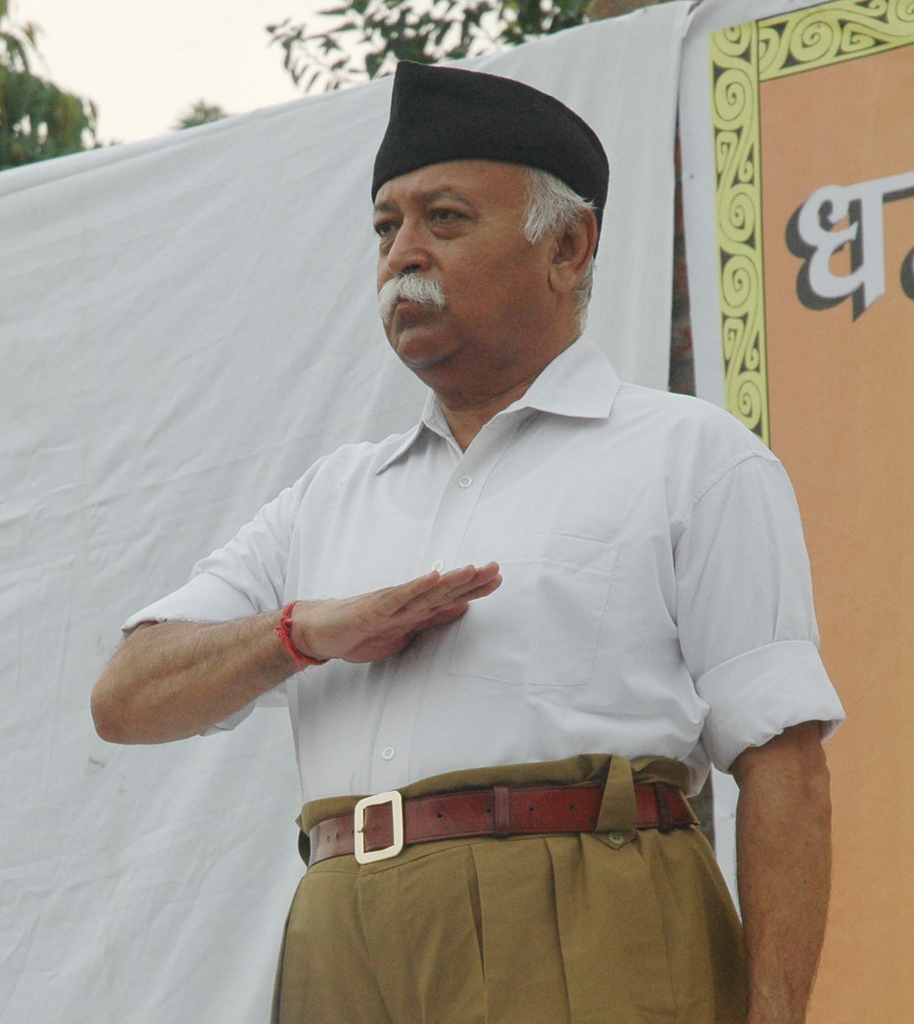
In the complex landscape of Indian society and governance, the interplay between religion and politics has always been a subject of intense scrutiny. Recently, Rashtriya Swayamsevak Sangh (RSS) Chief Mohan Bhagwat made a significant statement, asserting that religion inherently unites people, whereas politics often serves as an instrument of division. This remark has immediately drawn widespread attention, triggering a wave of reactions from various political parties and ideological factions across the nation.
This statement comes at a crucial juncture when social and political polarization appears to be deepening on multiple fronts. Analysts suggest that such statements not only resonate within intellectual circles but also spark conversations among the common populace, given that the entanglement of religion and politics remains a defining reality of Indian democracy.
Opposition Reaction and Demand for Accountability
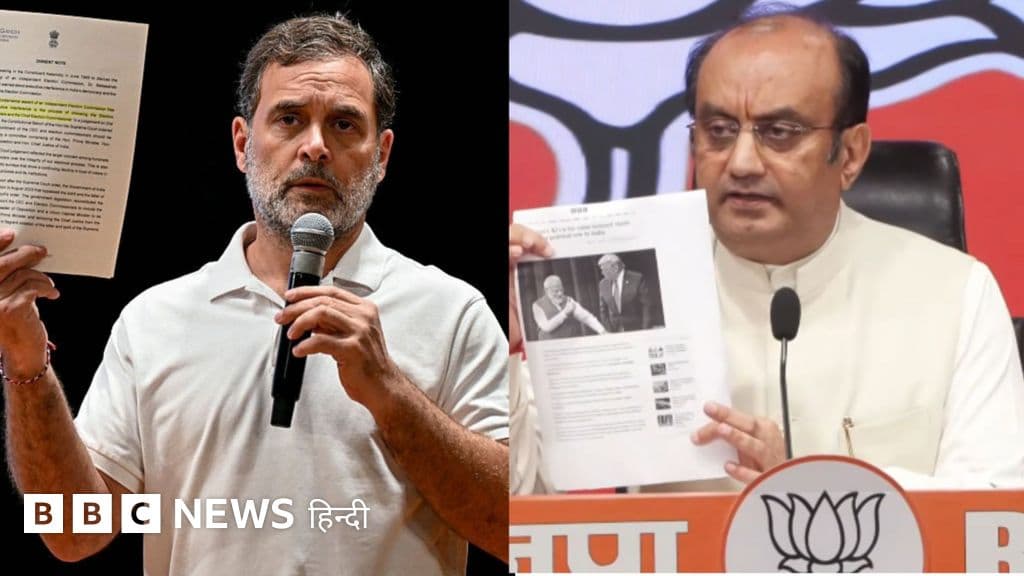
Following Bhagwat's remarks, opposition leaders were quick to respond, challenging the ideological consistency behind the statement. Several critics argued that if the RSS leadership genuinely believes that politics acts as a dividing force, they and their ideological affiliates should actively distance themselves from polarizing political strategies. The opposition has demanded that such philosophical acknowledgments be translated into practical actions on the ground.
Political observers note that opposition parties are utilizing this statement to question the ruling establishment's approach toward governance and electoral mobilization. The core argument remains that if the country's foremost ideological organization recognizes the divisive nature of contemporary politics, a serious introspection is required regarding the tactics employed to secure electoral victories.
Social Harmony and the Current National Scenario
Maintaining social harmony in a diverse nation like India has always been a formidable challenge. With myriad cultures, languages, and belief systems coexisting, differing interpretations of spirituality and religion are bound to exist. Bhagwat's viewpoint that religion serves to unite aligns with a philosophical perspective aimed at fostering moral values and human welfare.
However, when the domain of religion intersects with competitive electoral politics, its connotations undergo a dramatic shift. History demonstrates that whenever religious identities are leveraged for political gains, social fault lines tend to widen. Today, ordinary citizens increasingly express a desire for development and mutual brotherhood to take precedence over divisive agendas.
"The true essence of faith is to bring humanity together, whereas unchecked political ambition often erects walls of division among communities." — Senior Political Analyst
Questioning Political Methodologies
An examination of the prevailing political environment reveals that various factions consistently utilize identity-based equations to sway voters. Today, navigating caste and religious equations has become a cornerstone of electoral strategy. In this light, the RSS Chief's observation serves as a mirror to those political entities that risk societal cohesion for short-term electoral gains.
Citizens are increasingly questioning whether modern politics has become irredeemably divisive. Intellectuals argue that politics ought to remain a vehicle for public service rather than an apparatus for societal fragmentation. Until this fundamental character of political engagement undergoes a transformation, strengthening national unity will remain an uphill battle.
The Way Forward
Mohan Bhagwat's statement has reignited a necessary conversation about reinforcing forces that bind the nation together while resisting those that pull it apart. Understanding the delicate boundary between faith and statecraft remains imperative for every citizen and leader alike.
Ultimately, the true value of such observations lies in their practical implementation. If political leaders across the spectrum genuinely embrace the philosophy that fostering societal unity is paramount, India's democratic framework can achieve greater maturity and resilience.