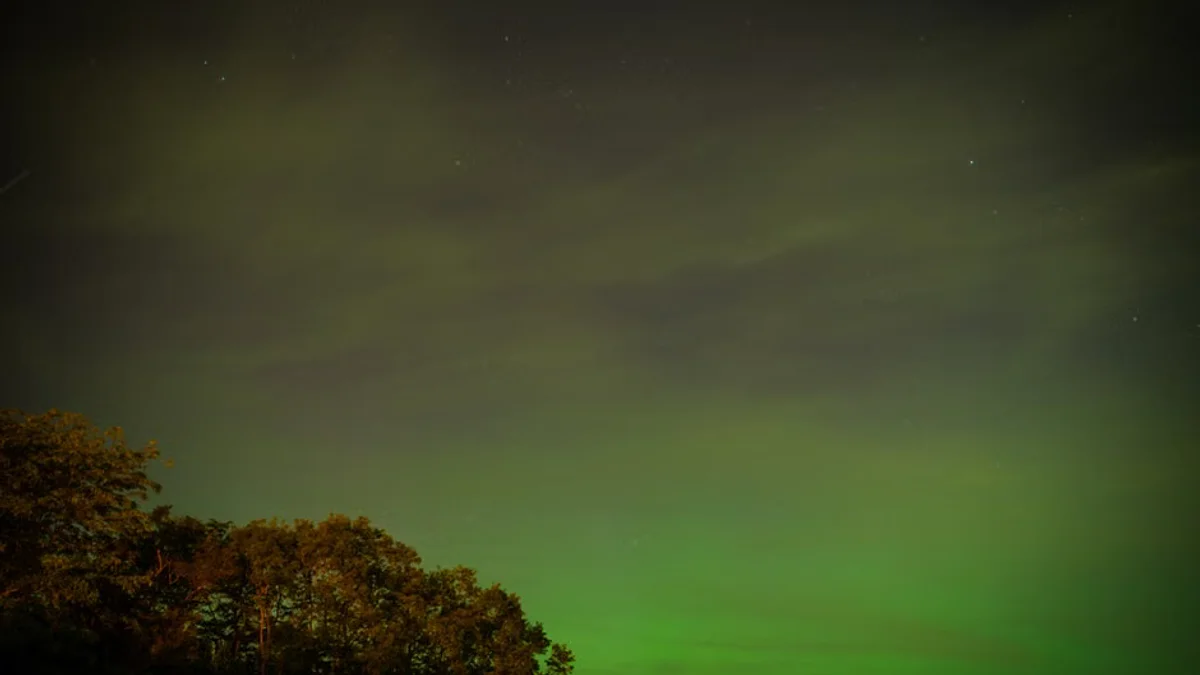
Skywatchers across the United Kingdom, continental Europe, and northern latitudes of North America were treated to an extraordinary atmospheric spectacle overnight as a powerful coronal mass ejection (CME) collided with Earth's magnetosphere, igniting vivid auroral displays far south of their typical polar perimeters.
The National Oceanic and Atmospheric Administration (NOAA) Space Weather Prediction Center and Britain’s Met Office registered significant geomagnetic storming, reaching G3 and G4 severity thresholds. While the event painted night skies in brilliant hues of crimson, emerald, and violet, it prompted immediate precautionary measures from critical infrastructure operators managing high-voltage transmission networks, transpolar aviation, and orbital satellite constellations.

Scientists note that the current surge in space weather activity directly correlates with the peak of Solar Cycle 25. As the Sun approaches its solar maximum, magnetic reconnection events and sunspot clusters are unleashing energetic plasma streams capable of inducing telluric currents in electrical grids and degrading global positioning system (GPS) accuracy used by maritime shipping and commercial aviation.
Key Highlights
- Broad Latitude Visibility: Auroral ribbons were clearly visible to the naked eye as far south as southern England, central Europe, and mid-latitude U.S. states.
- Technological Safeguards: Satellite operators and power transmission utilities executed mitigation protocols to manage voltage anomalies and atmospheric drag.
- Solar Cycle Peak: Astrophysicists predict elevated solar flare activity and CME events will persist over the coming 12 to 18 months.

While the visual brilliance of the aurora captivates public attention globally, the ongoing solar tempest reinforces the critical necessity of modern space weather forecasting to safeguard interconnected civil infrastructure.