ISRO Achieves Major Milestone in Gaganyaan Preparations

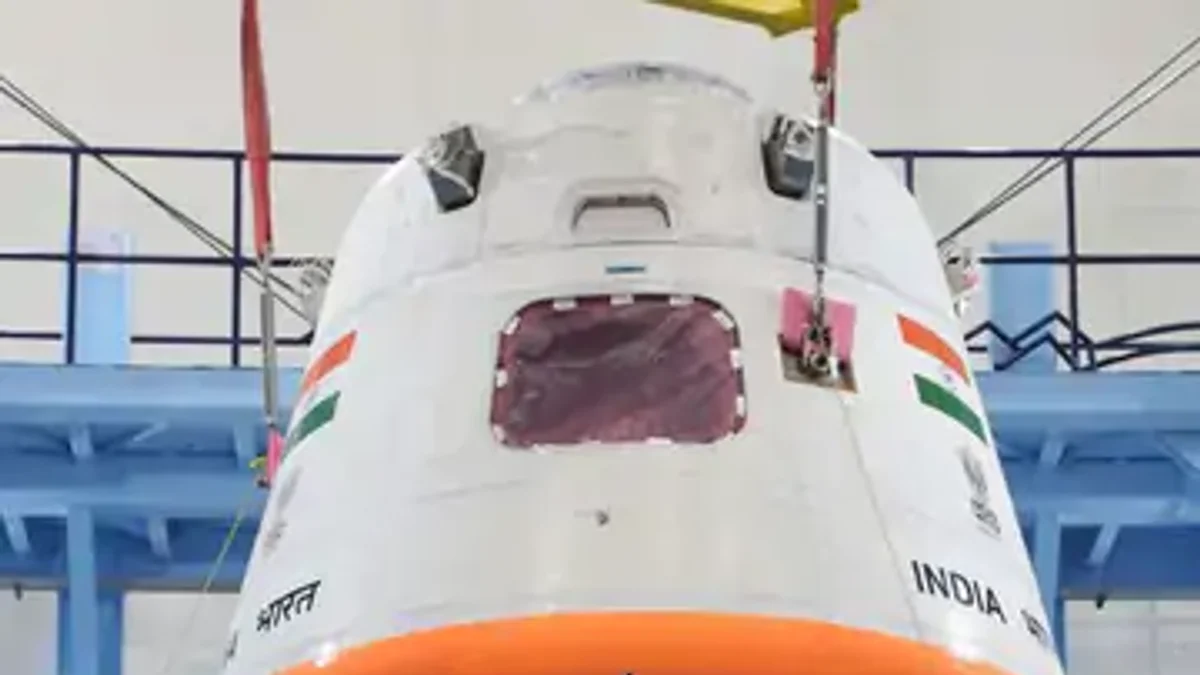
The Indian Space Research Organisation (ISRO) has successfully concluded a crucial series of tests for the Gaganyaan mission, focusing on the separation system of the crew module and service module. Conducted at the Vikram Sarabhai Space Centre in Thiruvananthapuram, these tests validate the design capabilities of the separation mechanism, which is vital for the safe return of astronauts from space.
During the orbital phase, the crew module and service module function as a single integrated unit. However, prior to re-entering Earth's atmosphere, the crew module must detach seamlessly. The recent tests simulated this exact separation sequence, cutting off all umbilical connections including electrical and fluid supply lines.
Rigorous Testing at Vikram Sarabhai Space Centre
The comprehensive test setup at VSSC was equipped with numerous instruments to monitor the structural integrity and shock-withstanding capacity of the crew module. Critical subsystems, including avionics, inertial navigation systems, thermal protection heat shields, and parachute deployment mechanisms, were rigorously evaluated to ensure flawless performance during actual flight conditions.

Scientists noted that these trials provide immense confidence as ISRO prepares for the first uncrewed flight, designated as G1, scheduled for 2026. This mission will test all critical parameters required to ensure human spaceflight safety before astronauts are sent into orbit.
Paving the Way for India's First Human Spaceflight
Gaganyaan is India's premier human spaceflight program, aiming to demonstrate indigenous capabilities in sending crew members to low Earth orbit and bringing them back safely. The successful module separation tests reaffirm ISRO's technical precision and methodical approach toward achieving this historic milestone.
As preparations intensify for the upcoming uncrewed and subsequent crewed missions, India continues to cement its position as a leading space-faring nation, driven by cutting-edge research, robust engineering, and unwavering scientific dedication.