The New Phase of American Strategy in Global Defense

According to recent intelligence and defense reports, the United States has begun shifting its military priorities to counter complex geopolitical challenges. With mounting security hurdles in various conflict zones, the Pentagon's primary focus has firmly shifted toward China's growing military might and its extensive underground missile protection systems. Defense analysts note that modern warfare has expanded from conventional battlefields deep into concrete mountains and subterranean tunnels, which traditional weaponry struggles to penetrate.
Primary reports from the US Department of Defense indicate that Washington is accelerating the development of next-generation offensive weapons. Advanced variants of Tomahawk cruise missiles and heavy bunker-busting munitions are being redesigned to overcome these hurdles. Experts suggest this evolution is not merely about arms procurement, but a calculated move to redefine the global power balance.
Technical Capabilities and Precision of Tomahawk Missiles
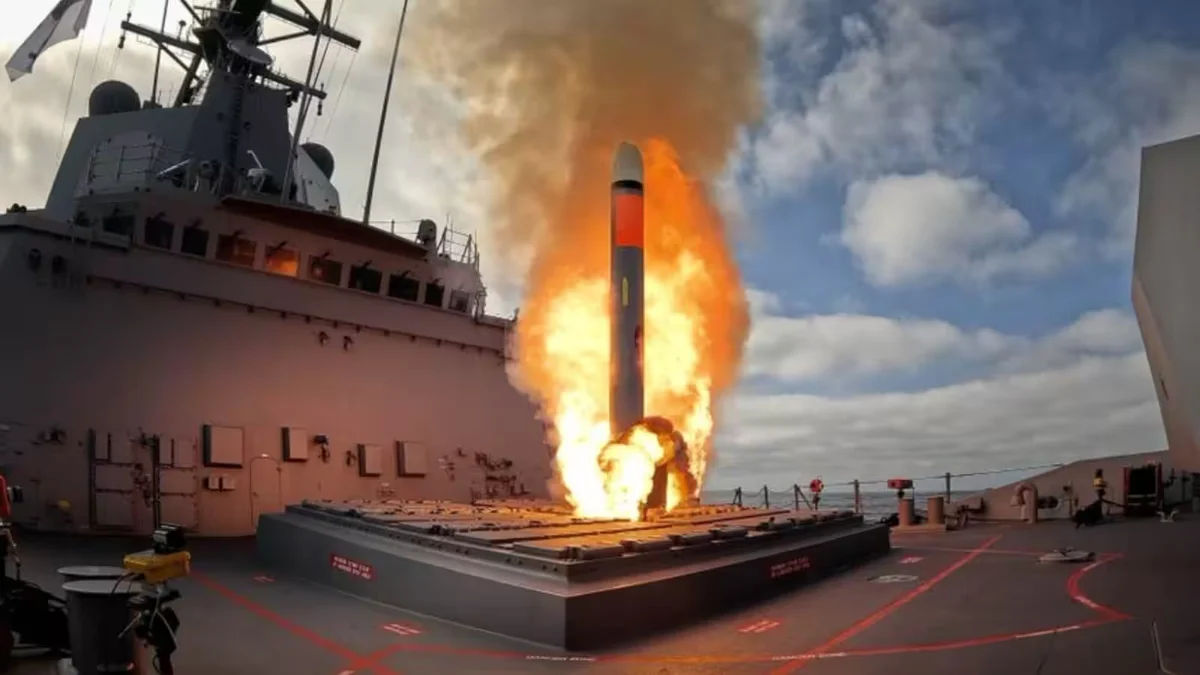
Long a cornerstone of the US Navy and Army, Tomahawk (BGM-109) cruise missiles have earned a formidable reputation for their long range, multi-platform adaptability, and pin-point accuracy. Measuring around 5.56 meters in length, a standard Tomahawk carries a launch weight exceeding 1,300 kilograms. Powered by Williams turbofan engines and solid-fuel boosters, the missile achieves cruising speeds between 880 and 920 kilometers per hour.

Modern Block IV and Block V variants feature operational ranges spanning from 1,600 kilometers to over 2,500 kilometers depending on fuel configurations. Operating at low altitudes of 30 to 50 meters, these missiles leverage terrain masking to evade enemy radar networks effectively. Advanced guidance systems, including inertial navigation, anti-jamming GPS, TERCOM terrain matching, and DSMAC optical matching, cement their status among the world's deadliest cruise missiles.
Targeting China's Underground Missile Silos
The primary challenge confronting the US defense establishment is China's extensive network of underground missile facilities embedded deep within mountain ranges. Beijing has safeguarded its nuclear and conventional arsenals against standard airstrikes. To neutralize these fortified subterranean structures, the US military is actively pursuing specialized Tomahawk bunker busters and heavy ordinance options.
Recent reports confirm that the US Army has successfully conducted live-fire tests of Tomahawk missiles from Typhon ground-based launcher systems. Drawing lessons from hardened energy and nuclear sites in regions like Iran, the Pentagon aims to enhance its penetration capabilities. Defense experts emphasize that breaching fortified concrete structures will remain a top priority in any future high-end conflict.
Domestic Political and Economic Pressures
While advancing its military arsenal, the White House faces intense political and economic pressure on the domestic front. Amid the run-up to midterm elections, ordinary citizens grapple with inflation, soaring daily expenses, and high fuel prices. Survey reports indicate growing voter dissatisfaction regarding expensive military entanglements abroad.
Analysts observe that direct US involvement in overseas conflicts has strained the national budget. Tariff measures and import duties have directly impacted consumer purchasing power. Consequently, justifying massive defense spending and new weapons development to the public remains a formidable challenge for the administration, with upcoming election results poised to shape future foreign policy.
Geopolitical Implications and Impact
The strategic rivalry between the US and China directly impacts security dynamics in the Indo-Pacific region. For nations like India, these developments require vigilant strategic calculus. Defense observers note that the proliferation of advanced missile technology and bunker-busting capabilities will fundamentally alter future warfare, necessitating robust domestic defense modernization.