Supreme Court Emphasizes Digital Rights for Children

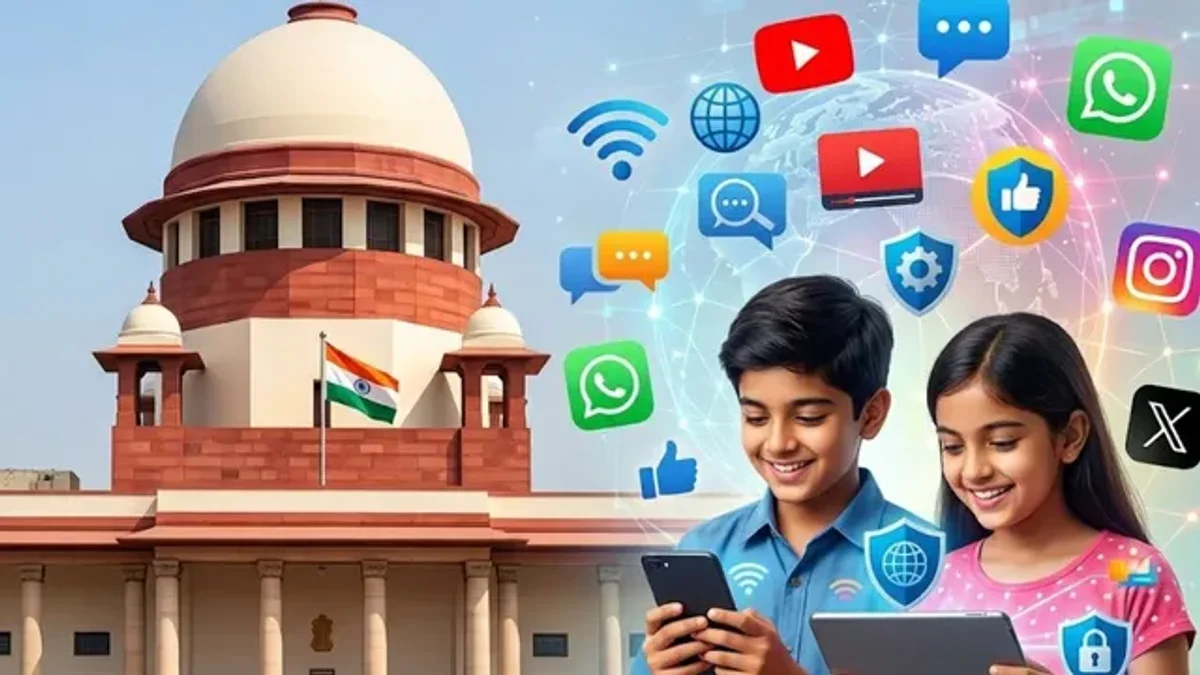
In a landmark observation regarding digital rights and online safety, the Supreme Court of India has asserted that internet access and usage is a fundamental right for every individual, including children. The apex court noted that children cannot be arbitrarily deprived of this right merely on the grounds of their age, emphasizing that digital inclusion is vital for their growth and education.
The bench comprising Justice J.B. Pardiwala and Justice K. Vinod Chandran made these remarks while issuing directions to strengthen mechanisms for detecting and removing Child Sexual Exploitation and Abuse Material (CSEAM) from online platforms. The court examined the delicate balance between ensuring child safety online and preserving their fundamental freedoms.
Constitutional Backing Under Articles 21 and 19
The court explicitly referred to Article 21 (Right to Life and Personal Liberty) and Article 19(1)(a) (Freedom of Speech and Expression) of the Indian Constitution, stating that the right to access and use the internet flows naturally from these provisions. The freedom of expression encompasses the right to seek, receive, and impart information and ideas of all kinds.

The bench observed that children possess these rights regardless of their age. Completely depriving them of internet access under the pretext of protection is as illogical as claiming that minors lack the conscience or freedom of expression that deserves safeguarding. Security and liberty are not mutually exclusive; children are entitled to both.
Why Complete Bans Fail and Solutions Like Child Mode
Addressing the debate around imposing absolute bans on children's internet use, the court cautioned that blanket restrictions often backfire. Instead of stopping children from using digital platforms, bans drive them toward unregulated, hidden, and far more dangerous online spaces away from parental oversight.
Rather than restricting access entirely, the court recommended implementing robust technological safeguards such as 'child mode' controls on social media accounts, stringent age-appropriate content filters, and enhanced reporting mechanisms for abusive material. This approach ensures a safe online environment without infringing upon children's fundamental digital rights.