Europe faces unprecedented climate challenges as ancient glaciers vanish

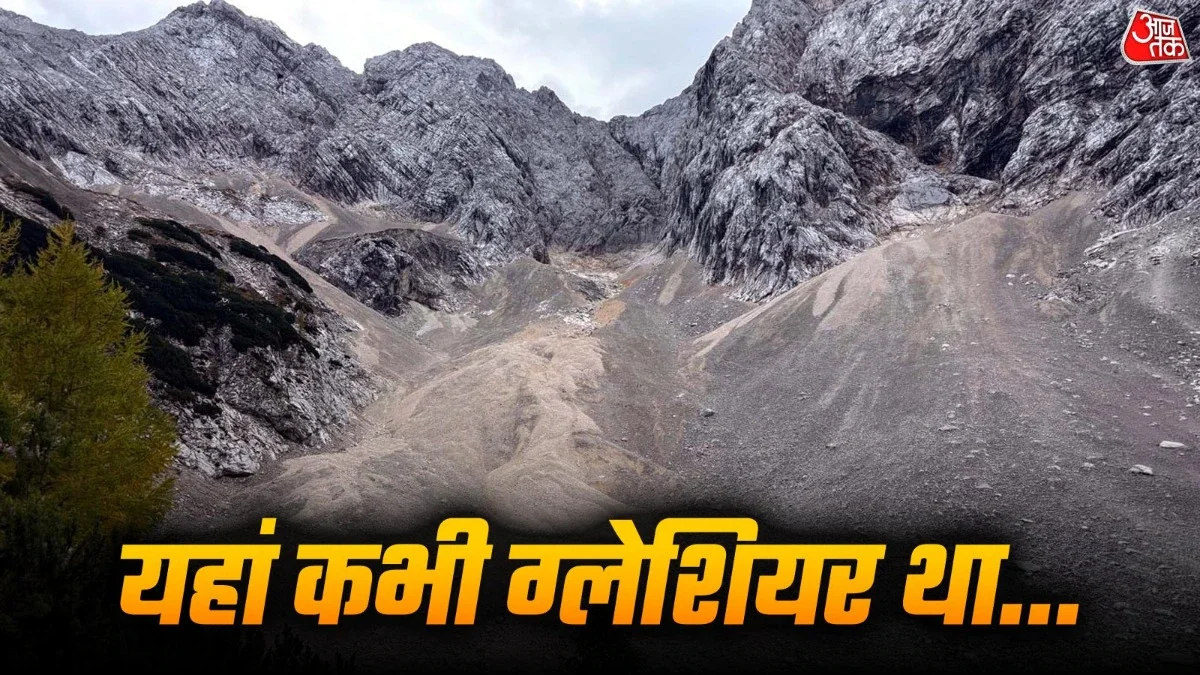
The global climate crisis has reached an alarming milestone in the heart of Europe. Environmental researchers in Slovenia have issued a dire warning regarding the rapid disappearance of the nation's historic glaciers. Driven by persistently rising temperatures and drastically reduced snowfall during winter months, these natural wonders are disappearing at an unprecedented rate. The highest mountain peak in the country, Mount Triglav, has completely lost its once-majestic ice cap, leaving behind barren rock.
This environmental catastrophe serves as a stark reminder of how human-induced global warming is reshaping our planet's geography. Scientists emphasize that the loss of glacial ice is not merely an isolated aesthetic tragedy, but a profound threat to future water security, regional biodiversity, and long-term ecological balance.
The Skuta Glacier: Fighting a losing battle for survival
Following the total demise of the Triglav glacier, the Skuta Glacier remains the solitary ice formation holding out in Slovenia. However, this final glacial remnant is fighting a losing battle against environmental degradation. Local scientists and conservationists have attempted desperate mitigation measures, including covering the melting ice sheets with gravel and small rocks to shield them from direct solar radiation during scorching summer months. Unfortunately, even these interventions have failed to halt the relentless melting process.

Researchers stationed in Ljubljana continue to monitor the fading ice mass, but acknowledge that the forces driving the retreat are too powerful. Without an immediate global turnaround in carbon emissions and temperature stabilization, Skuta is projected to follow the exact same fate as its predecessor within the next few years.
Eighty years of data reveal a staggering decline in ice volume
Long-term scientific monitoring spanning over eight decades paints a grim picture of the region's environmental health. Records dating back to 1946 show that the Triglav glacier originally spanned more than 14 hectares of mountainous terrain. Today, that entire expanse is completely devoid of ice. Similarly, the Skuta Glacier has shrunk dramatically from roughly three hectares down to a mere 1.5 hectares.
Prominent researchers note that the depth of the ice has also plummeted from multiple meters down to just a thin veneer. This dual reduction in both surface area and internal volume demonstrates that the structural integrity of the glacier has been fundamentally compromised.
"The rapid disappearance of these glaciers is a loud wake-up call for humanity. What we are witnessing is the dismantling of Earth's natural cooling systems right before our eyes."— Miha Pavšek, Glaciologist and Environmental Researcher
The twin drivers: Deficient snowfall and extreme summer heat
Climatologists attribute this accelerated melting to two primary factors: critically low winter snowfall and intensely hot summer seasons. When winter precipitation fails to replenish the mountain snowpack, glaciers enter the summer months severely depleted. Furthermore, recent unprecedented heatwaves across Europe have exerted immense thermal stress on alpine ecosystems, causing ancient ice reserves to liquefy at alarming rates.