Supreme Court Upholds Digital Freedom for Children

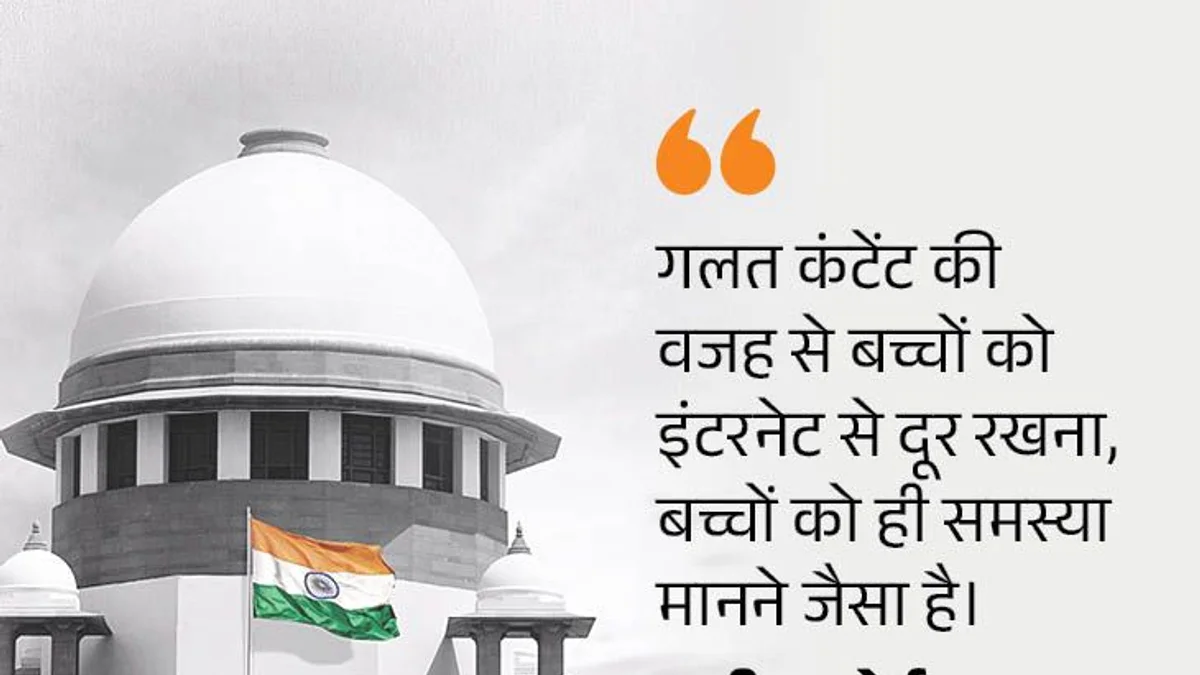
In a landmark observation, the Supreme Court of India has declared that internet access is a fundamental right for every individual, including children of all ages. The apex court emphasized that completely depriving children of the internet under the guise of safety is an impractical and flawed approach.
The bench comprising Justice J.B. Pardiwala and Justice K. Vinod Chandran noted that children's safety and their freedom are not mutually exclusive. The court pointed out that the internet is a vital marketplace for ideas, creative expression, and education, especially for children living in remote areas.
Why Banning Internet Access Fails
Addressing the calls for blanket bans on children's internet usage, the court warned that restrictive laws often produce counterproductive results. Rather than stopping internet use, bans drive children towards unregulated and highly unsafe platforms where risks are significantly higher.
Furthermore, fear of punishment or strict parental restrictions often prevents children from reporting online harassment, cyberbullying, or exploitation to trusted adults, leaving them vulnerable to predators.
Mandatory Child Mode and National Database for CSEAM
To combat online child sexual exploitation and abuse material (CSEAM), the Supreme Court directed the central government to establish a comprehensive national database. Additionally, social media companies have been instructed to report removed illicit content to law enforcement or cyber crime portals within two hours of detection.
The court also recommended implementing 'child mode' controls on social media accounts to ensure a safer digital environment without violating their fundamental rights to information and expression.