The Surge of the Far-Right in Mecklenburg-Western Pomerania
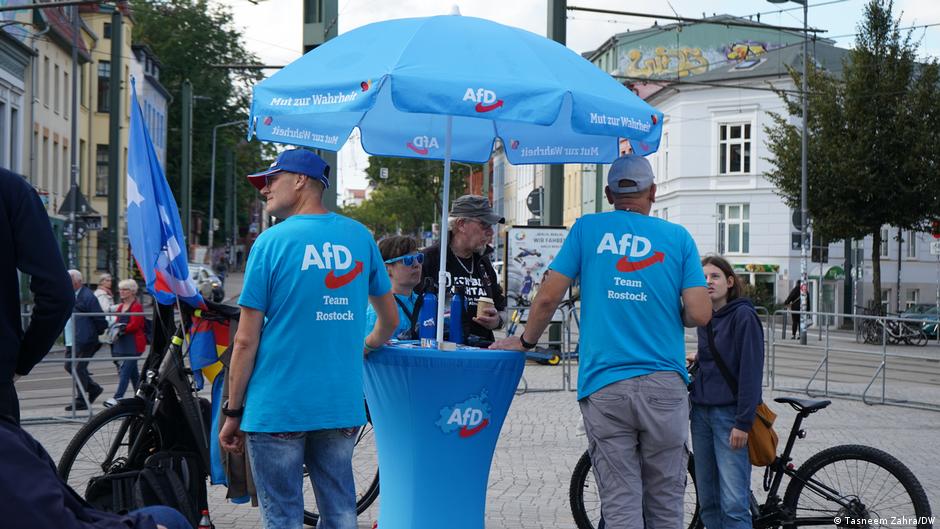
The eastern German state of Mecklenburg-Western Pomerania is a focal point in the upcoming state elections on September 20. Recent surveys indicate the AfD is leading, challenging the Social Democratic Party (SPD), part of Chancellor Olaf Scholz's federal coalition. The SPD has governed this state since 1998, but under Manuela Schwesig's leadership, its position appears precarious. If current trends hold, the SPD would need a complex three-party coalition, signaling a significant shift in voter sentiments against traditional political strongholds. Forming a government for the AfD will be complex, as mainstream parties reject alliances. However, the left-wing BSW party might adopt a different stance, potentially complicating coalition formation further.
AfD's Migration Policy and its Impact
Professor Wolfgang Muno of Rostock University, an expert on the global rise of the far-right, notes the AfD in Mecklenburg-Western Pomerania has adopted a "conservative and moderate" policy compared to its national stance. While national AfD calls for mass deportations, the regional party focuses on 'illegal aliens.' Professor Muno emphasizes, "They present illegal migrants as linked to crime and insecurity, which is why many people support the AfD in this matter." This strategy effectively stokes fears among voters. Michaela Koefner, a German political expert, expresses grave concerns about the AfD's 'remigration' policy:
"Civil society groups are concerned that this (remigration) will create an atmosphere where people who look different and have foreign backgrounds will be viewed with suspicion... The AfD has openly welcomed people with radical right-wing views. In fact, one of their regional leaders... can legally be called a 'Nazi'."— Michaela Koefner, German Political Expert
This perspective highlights how AfD's policies foster social division.
Economic Hardship in Eastern Germany and AfD's Promises
Mecklenburg-Western Pomerania, like most eastern German states, has a history of economic hardship. Historically agricultural and underdeveloped, the region saw some industrialization under Soviet influence post-WWII. However, the dissolution of the Soviet Union in 1991 led to factory closures and mass unemployment. No major industry has since replaced what was lost. Most residents work in low-income sectors like tourism or agriculture, leading to deep-seated economic discontent. Professor Muno notes recent improvements like naval weapon production, but the economy remains significantly underdeveloped. This disparity creates fertile ground for the AfD, which promises to transform the state's economic situation, appealing directly to voters who feel neglected and marginalized.
AfD's Evolving Supporter Base and Dissatisfaction with the Current Government
The AfD's growing popularity is also attributed to its expanding supporter base. Traditionally, core AfD voters were middle-aged, less-educated, non-religious men in rural areas. However, the party has successfully extended its reach to women and the elderly. Muno explains, "First, they attracted extremist people, then they reached out to those who are against immigration or who are racist or afraid of immigrants." The AfD now also targets "people who live in rural areas and feel neglected," capitalizing on development gaps. A significant segment of the population is also dissatisfied with Chancellor Olaf Scholz's current government. Discontent over inflation, energy crisis, and national issues leads many to view the AfD as an alternative. This widespread dissatisfaction plays a crucial role in propelling the AfD into a powerful political force.
Conclusion: Portents for Future Politics
The upcoming elections in Mecklenburg-Western Pomerania and Berlin will serve as a crucial report card on the AfD's growing influence and the diminishing trust in Chancellor Olaf Scholz's federal government. These results will offer significant insights into Germany's national political future. If the AfD performs strongly, it will signal major shifts ahead of the 2029 federal elections, posing a serious challenge to the current coalition and potentially impacting Chancellor Scholz's term. The AfD's surge underscores that Germany's social and economic issues, particularly in the eastern states, demand urgent attention and new solutions, which mainstream parties may not be adequately addressing. The outcomes will play a vital role in shaping Germany's political trajectory.