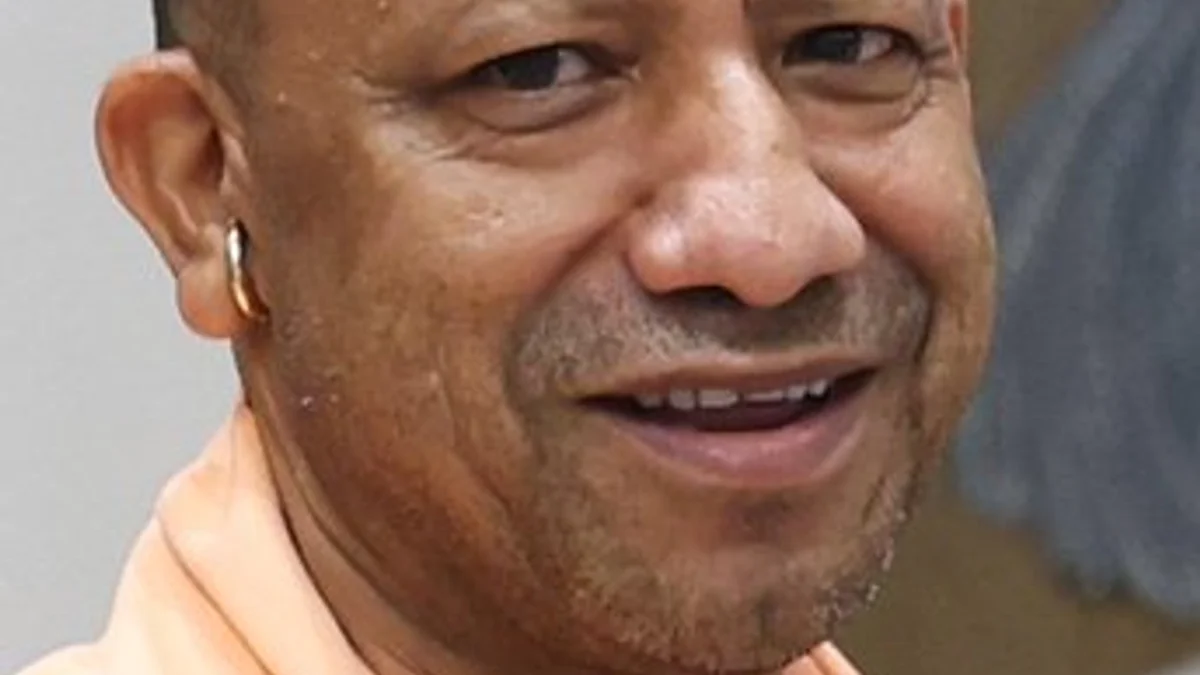
The political discourse in Uttar Pradesh has heated up following Chief Minister Yogi Adityanath's '80-20' remark, with Asaduddin Owaisi-led AIMIM launching a sharp counterattack. AIMIM's Central Uttar Pradesh President, Sheikh Tahir Siddiqui, stated that such statements do not behove a person holding a constitutional office and emphasized that the Chief Minister represents 100 percent of the public.
Constitutional Responsibility and Public Representation
Chief Minister Yogi Adityanath had earlier referenced an '80-20 political fight' in the state, associating 80 percent with the NDA and 20 percent with the opposition's PDA formula. Objecting to this division, Sheikh Tahir Siddiqui argued that focusing exclusively on 80 percent while sidelining the remaining 20 percent violates the core spirit of the Indian Constitution.
He asserted that the 20 percent population is an integral part of the country, reminding that people from all communities fought shoulder-to-shoulder during India's freedom struggle.
Allegations of Polarization and Political Gains
The AIMIM leader further accused the government of political polarization, claiming that polarizing statements are often amplified as elections draw closer to consolidate vote banks while ignoring the grievances of minority communities.
As political reactions continue to pour in from various factions, the debate surrounding identity politics and inclusive governance remains a central theme in the state's political landscape.
'The Freelance' independently covers political statements and public discourse. The claims and counter-claims mentioned in this article reflect ongoing political debates. Material credits: Respective political statements and media reports.