
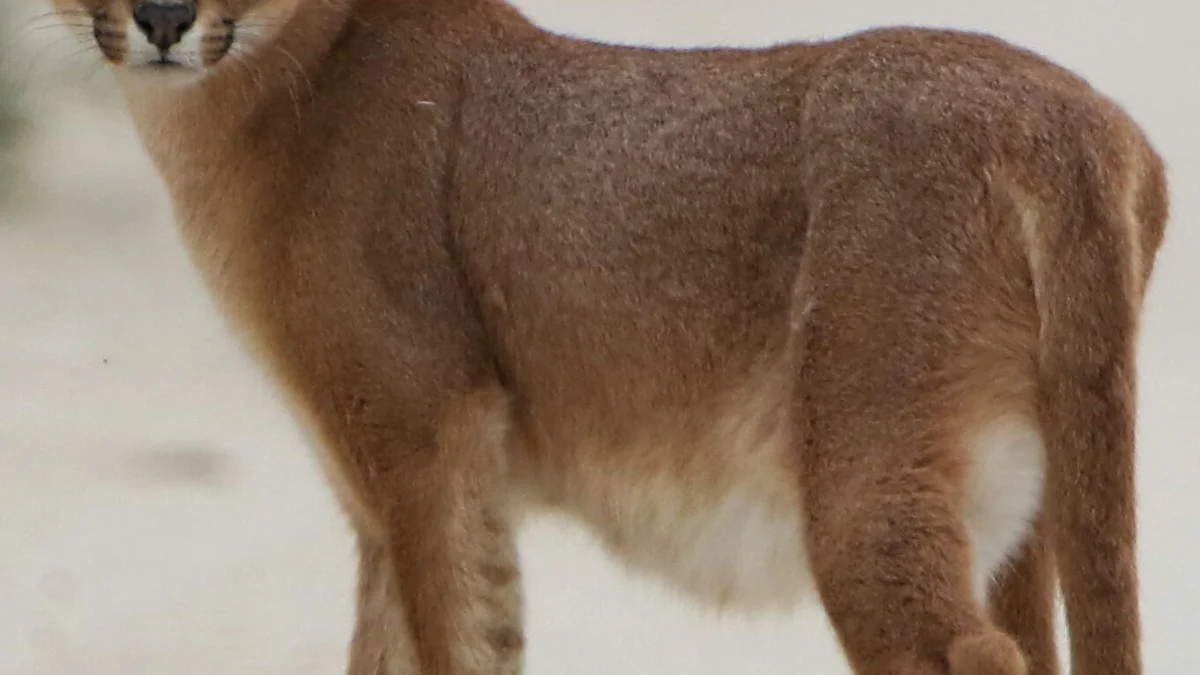
In a major positive development for Indian wildlife conservation, the rare and endangered 'Asiatic Caracal' has found a thriving habitat in the forests of Rajasthan. Trap cameras installed across the landscape have recorded around 200 caracals, marking the highest concentration of this elusive feline in the country. Given that the species has disappeared from roughly 96 percent of its historic range in India, this discovery is being hailed as a monumental success by conservationists and forest officials.
Elusive Feline Now Visible in Daylight
The caracal is an intensely agile, secretive, and shy wildcat that typically avoids human settlements and hunts primarily under the cover of darkness. However, due to a healthy population and secure habitat in these specific woodlands, the animal is now occasionally being captured on camera traps even during daylight hours. Forest authorities interpret this as a definitive sign of a thriving ecosystem that fully supports the needs of the species.
Conservation experts recently conducted specialized awareness seminars for forest personnel and wildlife enthusiasts to share insights into the behavior and historical decline of the caracal. Experts noted that prior to independence, the animal roamed across a vast expanse of territory, but its habitat dwindled drastically over the decades, restricting its surviving stronghold mainly to pockets of Rajasthan.
Exceptional Hunting Skills and Solitary Nature
Physically, the caracal resembles a cross between a small wildcat and a leopard, distinguished by its striking tufted ears and remarkable leaping power. It is renowned for its stealthy hunting techniques, often crouching silently in bushes before launching powerful aerial leaps to catch birds mid-flight. Hares and other small mammals also form a significant part of its regular diet.
Caracals are predominantly solitary creatures, marking their own territories and interacting primarily during the breeding season. Female caracals shoulder the complete responsibility of rearing their kittens, protecting and guiding them until they mature. In light of these findings, the local forest department has significantly ramped up patrolling and monitoring to ensure total protection for this fragile, magnificent predator.
'The Freelance' does not independently verify claims made in viral social media reports regarding wildlife movements. This story highlights ongoing conservation milestones reported by forest authorities and wildlife experts. Video/Photo Credit: Respective Social Media Handlers / Forest Department.